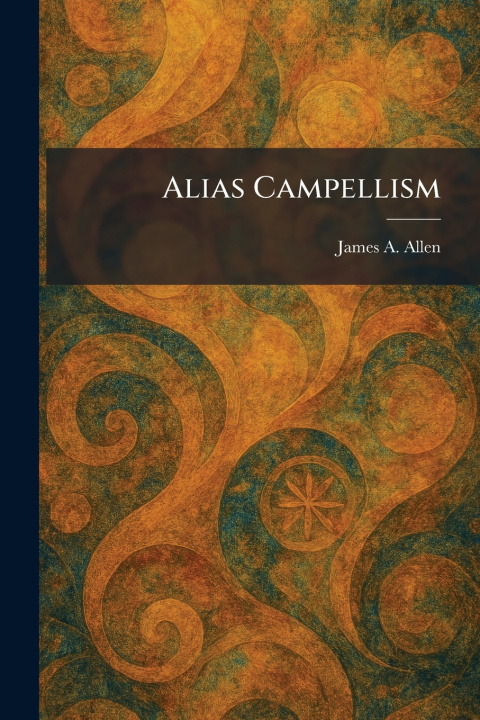
"Alias Campellism" is a profound theological exploration and defense of the Restoration Movement within American Christianity. Written by James A. Allen, this work addresses the common label of "Campbellism"-a term often used by critics to characterize the movement as a following of Alexander Campbell rather than a return to New Testament Christianity. Through rigorous scriptural analysis and logical argumentation, Allen seeks to dismantle the misconceptions surrounding the movement's identity and its place in the broader religious landscape.
The text emphasizes the core tenets of the Restoration plea: the rejection of human creeds, the supreme authority of the Bible, and the pursuit of Christian unity based on the apostolic pattern. The book serves as both an apologetic work and a clarion call for believers to examine the foundations of their faith. "Alias Campellism" provides valuable historical and theological insight into early 20th-century religious debates, offering readers a clear perspective on the motivations and convictions of those striving to restore the primitive church. This work remains a significant resource for students of American religious history and those interested in the development of independent Christian thought.
This work has been selected by scholars as being culturally important, and is part of the knowledge base of civilization as we know it. This work was reproduced from the original artifact, and remains as true to the original work as possible. Therefore, you may see the original copyright references, library stamps (as most of these works have been housed in our most important libraries around the world), and other notations in the work.
This work is in the public domain in the United States of America, and possibly other nations. Within the United States, you may freely copy and distribute this work, as no entity (individual or corporate) has a copyright on the body of the work.
As a reproduction of a historical artifact, this work may contain missing or blurred pages, poor pictures, errant marks, etc. Scholars believe, and we concur, that this work is important enough to be preserved, reproduced, and made generally available to the public. We appreciate your support of the preservation process, and thank you for being an important part of keeping this knowledge alive and relevant.