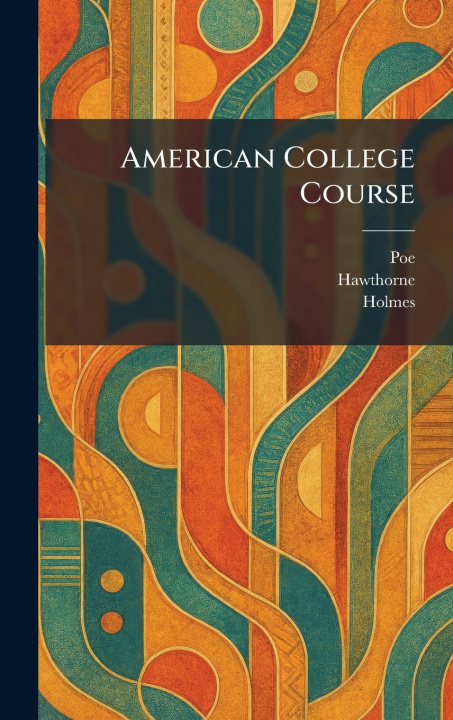
"American College Course" presents a curated selection of seminal works from three pillars of American literature: Edgar Allan Poe, Nathaniel Hawthorne, and Oliver Wendell Holmes. Designed as an educational cornerstone, this volume explores the depth of the American literary tradition through a blend of gothic storytelling, moral allegory, and intellectual inquiry.
Readers will find themselves immersed in the dark, atmospheric tales of Poe, the complex ethical landscapes of Hawthorne's fiction, and the wit and wisdom of Holmes's essays and poetry. This collection serves as a comprehensive guide for students and scholars alike, offering a window into the evolution of the American voice during the 19th century. By bringing together these diverse yet interconnected masters, the work provides a robust foundation for understanding the themes of romanticism and the human condition that define early American letters.
Whether used as a pedagogical tool or for personal enrichment, "American College Course" remains a vital resource for anyone seeking to engage with the classic texts that shaped a nation's identity and literary heritage.
This work has been selected by scholars as being culturally important, and is part of the knowledge base of civilization as we know it. This work was reproduced from the original artifact, and remains as true to the original work as possible. Therefore, you may see the original copyright references, library stamps (as most of these works have been housed in our most important libraries around the world), and other notations in the work.
This work is in the public domain in the United States of America, and possibly other nations. Within the United States, you may freely copy and distribute this work, as no entity (individual or corporate) has a copyright on the body of the work.
As a reproduction of a historical artifact, this work may contain missing or blurred pages, poor pictures, errant marks, etc. Scholars believe, and we concur, that this work is important enough to be preserved, reproduced, and made generally available to the public. We appreciate your support of the preservation process, and thank you for being an important part of keeping this knowledge alive and relevant.