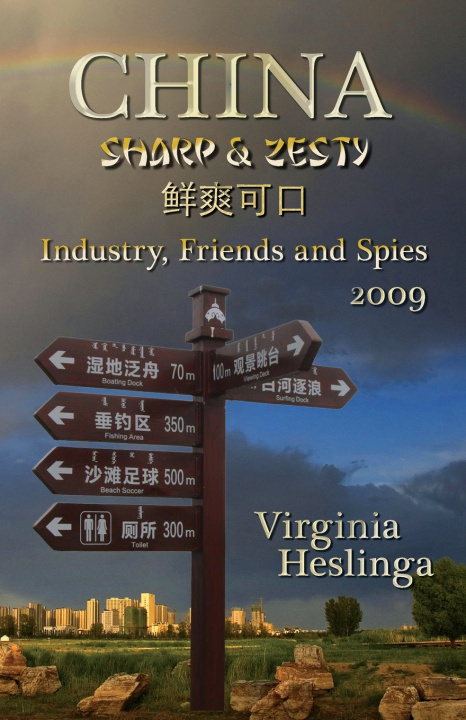
When Virginia returns to China for her third summer as a volunteer English teacher, she expects a familiar experience filled with warm hospitality, cultural immersion, and the sights, sounds, and flavors she had come to love during previous assignments in remote regions of the country. Instead, she arrives in Inner Mongolia and finds herself in an environment that feels strangely disconnected from the China she thought she knew. The hotel serving as her team's base is filled with Russian military, Russian food, and an atmosphere that lacks many of the cultural markers she associates with China. This unexpected introduction becomes the first of many surprises that challenge her assumptions about the country, her faith, and herself.
Traveling with a small team of volunteer teachers, four team members share years of friendship and previous teaching experiences. Doug, a last-minute addition, while at the required cultural training in Nanjing, remains something of a mystery. His extensive knowledge of Chinese history, politics, economics, and international relations fascinates Virginia while simultaneously exposing her own gaps in understanding. As the team navigates long teaching days, crowded schedules, and the quiet awareness that privacy is limited, relationships are tested.
Beyond the classroom, Virginia encounters a region shaped by centuries of cultural exchange and political complexity. Inner Mongolia is not the China portrayed in travel brochures. It is a crossroads where Mongolian traditions, Chinese influence, Russian commerce, and modern geopolitical realities intersect. Shared meals become lessons in history, and casual conversations reveal layers of economic, cultural, and military relationships between nations. Encounters with students, teachers, hotel staff, and local residents challenge simplistic views of identity, culture, and belonging. In this growing industrial city's unfamiliar settings, she gains her deepest insights.
Through seen and unseen cultural surveillance, shared meals, laughter, surprises, friendships, and moments of profound connection, Virginia realizes that God's purpose in bringing her back to China extends far beyond the classroom. Rich with humor, cultural observation, and honest self-reflection, this memoir invites readers to cross geographical, cultural, relational, and spiritual borders. Heslinga's non-fiction narrative reveals the most significant discoveries are the ones remake inward attitudes and choices from new perspectives and experiences.