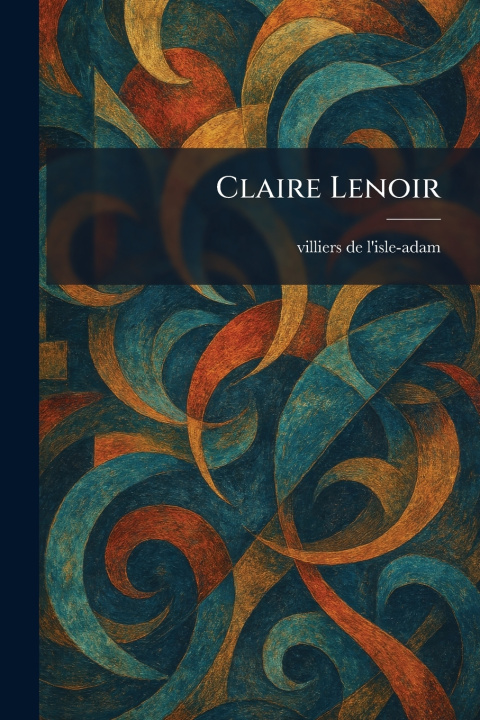
"Claire Lenoir" is a haunting and intellectually provocative masterpiece by the French Symbolist writer Villiers de l'Isle-Adam. A seminal work of philosophical horror, the narrative follows the skeptical Dr. Tribulat Bonhomet as he encounters the mysterious Claire Lenoir and her husband, Césaire. Set against a backdrop of occult intrigue and scientific curiosity, the story delves into the profound mysteries of the human soul and the possibility of life after death.
As the protagonist attempts to reconcile his rationalist worldview with increasingly inexplicable phenomena, the work explores themes of vengeance, metaphysical terror, and the limits of human understanding. Villiers de l'Isle-Adam expertly weaves a tale that is both a chilling supernatural mystery and a complex critique of nineteenth-century positivism. "Claire Lenoir" remains a landmark of decadent literature, celebrated for its atmospheric prose and its daring exploration of the boundaries between the physical and the spiritual realms. This work serves as an essential example of the Symbolist movement's fascination with the macabre and the unseen forces that govern human existence.
This work has been selected by scholars as being culturally important, and is part of the knowledge base of civilization as we know it. This work was reproduced from the original artifact, and remains as true to the original work as possible. Therefore, you may see the original copyright references, library stamps (as most of these works have been housed in our most important libraries around the world), and other notations in the work.
This work is in the public domain in the United States of America, and possibly other nations. Within the United States, you may freely copy and distribute this work, as no entity (individual or corporate) has a copyright on the body of the work.
As a reproduction of a historical artifact, this work may contain missing or blurred pages, poor pictures, errant marks, etc. Scholars believe, and we concur, that this work is important enough to be preserved, reproduced, and made generally available to the public. We appreciate your support of the preservation process, and thank you for being an important part of keeping this knowledge alive and relevant.