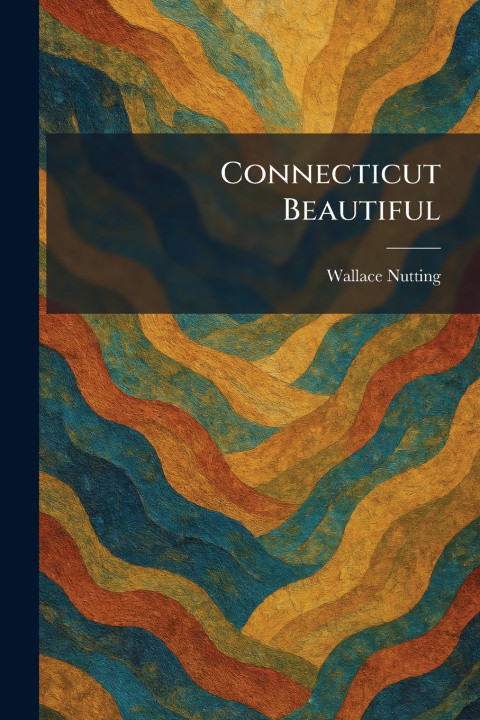
"Connecticut Beautiful" is a masterful tribute to the Nutmeg State, capturing its pastoral charm and architectural heritage through the lens and pen of the renowned Wallace Nutting. Part of the celebrated "States Beautiful" series, this work serves as both a detailed travelogue and a historical survey, showcasing the serene landscapes, colonial dwellings, and quintessential New England character that defined the early twentieth century.
Nutting's evocative prose and keen eye for detail highlight the aesthetic value of the Connecticut countryside, from its rolling hills and winding rivers to its historic stone walls and venerable farmhouses. The work reflects a deep appreciation for the "Old America" aesthetic, emphasizing the preservation of tradition and the quiet beauty of rural life. Beyond its visual appeal, the book offers reflections on the state's cultural history and the importance of preserving its natural and man-made landmarks.
Historians, residents, and admirers of classic Americana will find "Connecticut Beautiful" to be an invaluable resource for understanding the regional identity and visual history of the state. It stands as a testament to the enduring appeal of New England's scenery and remains a quintessential example of early twentieth-century regionalist literature and pictorial documentation.
This work has been selected by scholars as being culturally important, and is part of the knowledge base of civilization as we know it. This work was reproduced from the original artifact, and remains as true to the original work as possible. Therefore, you may see the original copyright references, library stamps (as most of these works have been housed in our most important libraries around the world), and other notations in the work.
This work is in the public domain in the United States of America, and possibly other nations. Within the United States, you may freely copy and distribute this work, as no entity (individual or corporate) has a copyright on the body of the work.
As a reproduction of a historical artifact, this work may contain missing or blurred pages, poor pictures, errant marks, etc. Scholars believe, and we concur, that this work is important enough to be preserved, reproduced, and made generally available to the public. We appreciate your support of the preservation process, and thank you for being an important part of keeping this knowledge alive and relevant.