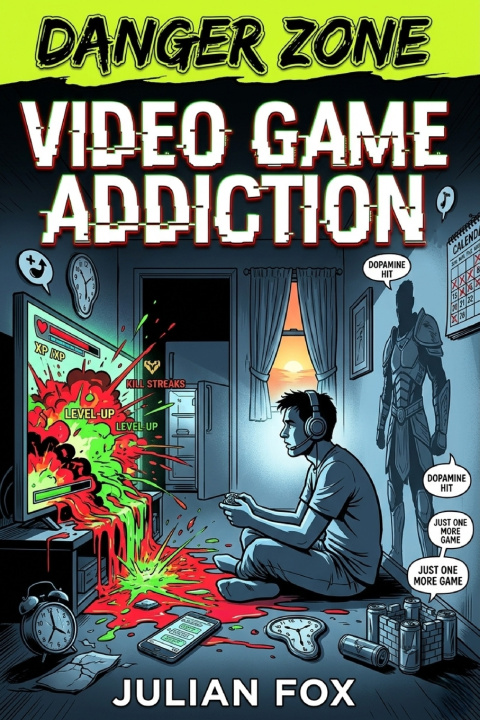
You do not have a gaming problem. You just game a lot. You have a job. You pay your bills. You show up to the things you need to show up to. Plenty of people play this much and are fine.
That is what most people say. Right up until they cannot comfortably go three days without playing, the people around them have quietly stopped expecting them to be present, and the life they were supposed to be building keeps not getting started.
This book is not an intervention. It is not anti-gaming propaganda, and it does not treat games like the enemy. Games are genuinely good. Brilliantly designed, socially rich, and capable of providing real enjoyment in a real life. The problem is not the game. The problem is the specific relationship that develops when gaming stops being something you do and starts being something you need, and the quiet accumulation of cost that follows.
Danger Zone: Video Game Addiction examines that relationship honestly and without drama. It looks at how modern games are built to keep you inside them indefinitely, what happens to your brain when high-stimulation entertainment becomes the default, why escapism and rest are not the same thing, how compulsive gaming affects the people who share your life, and what the difference actually is between choosing to play and being unable to comfortably not play.
It also offers a framework for changing the arrangement. Not by quitting. Not by declaring games the enemy and throwing the console out the window. By building an honest, intentional relationship with something you enjoy, on terms that serve your actual life rather than the game's default.
The goal is not transformation. It is clarity. And if you are reading this, you probably already know more about what is going on than you have been willing to say out loud.
Part of the Danger Zone series by Julian Fox. Blunt, honest, and practical guides to the everyday situations most people manage instead of address.