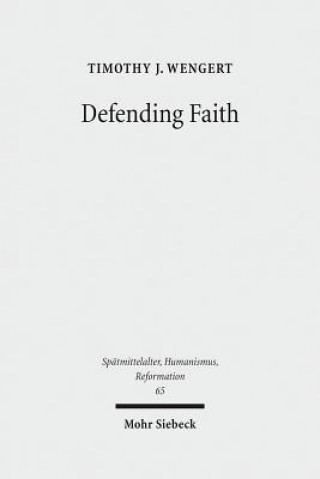
Justification by faith alone defined teaching in Evangelical churches of the sixteenth century. When the former reformer of Nuremberg, Andreas Osiander (1498-1552) advocated a different understanding of that doctrine in 1550 as professor of theology at the University of Königsberg in East Prussia, almost all other Evangelical churches in German-speaking lands rejected his position. Timothy J. Wengert studies their objections to Osiander s theology in detail, offering a theological perspective on the process of confessionalization among Lutherans in the period between Martin Luther s death in 1546 and the publication of the Book of Concord in 1580. Reactions against Osiander represent a singular literary event, when 100 tracts for and against Osiander s position were published between 1551 and 1559. The author of this study examines these responses, paying special attention to the contributions of Gnesio-Lutherans, Johannes Brenz and Philipp Melanchthon but also to the role that Luther s writings played in the debate.