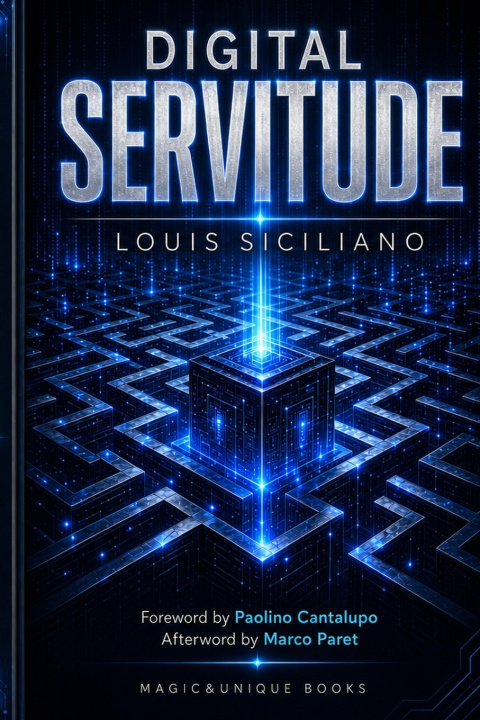
Attention is the first territory of freedom. Yet the most powerful digital systems of our time are built to interrupt it, measure it, predict it, and sell access to it.
Digital Servitude names the condition in which formal freedom coexists with structural dependence on platforms that learn from behavior and reorganize the environment around it.
Louis Siciliano follows this system from the smartphone in the body to dopamine and expectation, from sleep and adolescent development to social comparison, cyberbullying, algorithmic visibility, surveillance, and the political economy of attention.
At the center of the argument is cognitive dignity: the right not to be reduced to a surface of capture and the capacity to remain whole enough to think, remember, study, create, love, sleep, become bored, and choose.
Bringing together neuroscience, psychology, philosophy, economics, education, design, and public policy, the work refuses both nostalgia and technological fatalism. Its four movements-Capture, Body and Brain, Social Wound, and Liberation-trace how digital systems shape behavior and how attention can be recovered through personal practice, family culture, schools, design, law, and a renewed politics of human presence.
With an essential neurocognitive atlas, current data, landmark studies, clinical warning signs, a chronology of capture, and practical strategies for schools and families, Digital Servitude offers both diagnosis and a path forward.
The question is no longer whether technology is part of life. The question is whether life will remain larger than the systems built to hold it.