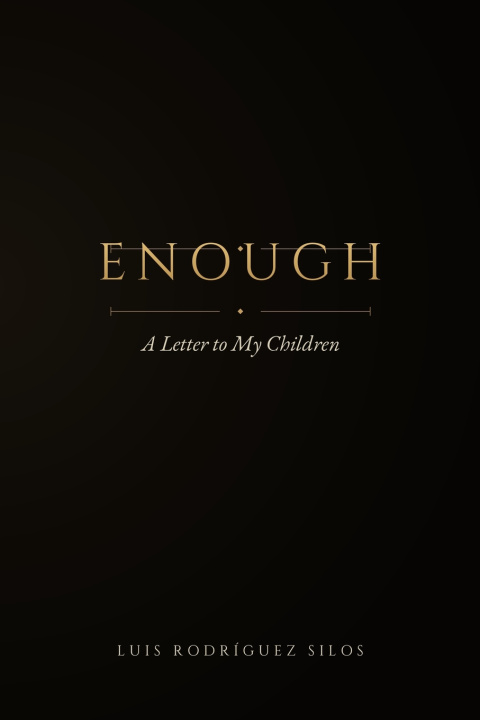
"Is this worth the life you're spending on it?"
A father sits down to write the letter he hopes his children won't need too soon - a letter for the day his words might fail him, or the day he is no longer there. What he leaves them is not advice for getting ahead, but something quieter and harder to find: a way of looking at a life and asking whether it is being spent well.
ENOUGH is a book about attention - about the difference between the years we live and the years we merely pass through. Drawing on Stoicism, Buddhism, and existentialism - Marcus Aurelius, Epictetus, the Buddha, Camus, Viktor Frankl - but speaking in the plain voice of a father at the kitchen table, it moves through the questions that decide the shape of a life: What is work for? Why is more never enough? How do we stay present? How do we meet loss, fear, failure, and our own mortality without looking away?
These are not lessons in success. They are the conclusions of someone who learned them late and wishes he had been handed them sooner: that you need far less than you think; that the best moments cost almost nothing; that the most important decisions are the small ones, made in the margins; that what they can never take from you is how you choose to respond.
Honest, unsentimental, and quietly radical in a culture that sells speed and accumulation, ENOUGH is a meditation on presence, on measure, and on the courage to decide that a life - your one life - is already, and always was, enough.