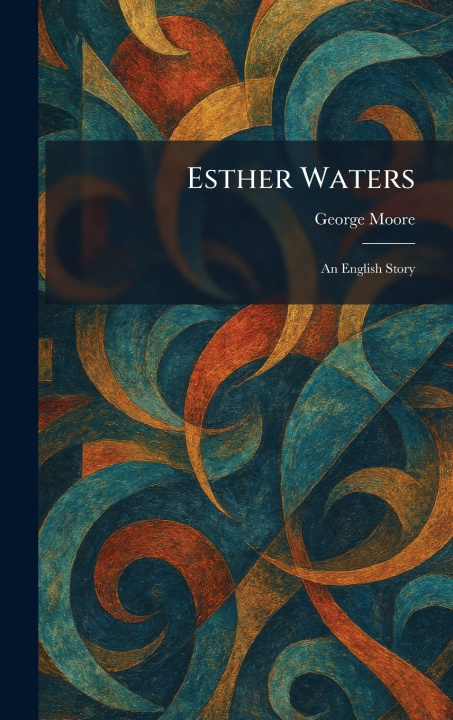
"Esther Waters an English Story" is a landmark work of naturalist fiction that offers a stark and sympathetic portrayal of the struggles faced by a working-class woman in late Victorian England. The novel follows Esther Waters, a young woman of deep religious convictions who enters domestic service to support herself. Her life takes a dramatic turn when she is seduced and left pregnant, forcing her into a grueling battle against poverty, social stigma, and the harsh realities of the era's class structure.
George Moore's narrative is celebrated for its unflinching realism and its detailed depiction of the underbelly of English society, including the high-stakes world of horse racing and the precarious nature of employment for the poor. Unlike many contemporary works of its time, the novel avoids moralistic condemnation, instead focusing on Esther's resilience and her unwavering devotion to her son. Through its focus on everyday life and social detail, the work challenged the conventions of the 19th-century novel.
This compelling story remains a significant contribution to English literature, praised for its psychological depth and its courageous exploration of themes such as gambling, religion, and the plight of the unwed mother. "Esther Waters an English Story" stands as a poignant testament to the human spirit's endurance in the face of systemic adversity.
This work has been selected by scholars as being culturally important, and is part of the knowledge base of civilization as we know it. This work was reproduced from the original artifact, and remains as true to the original work as possible. Therefore, you may see the original copyright references, library stamps (as most of these works have been housed in our most important libraries around the world), and other notations in the work.
This work is in the public domain in the United States of America, and possibly other nations. Within the United States, you may freely copy and distribute this work, as no entity (individual or corporate) has a copyright on the body of the work.
As a reproduction of a historical artifact, this work may contain missing or blurred pages, poor pictures, errant marks, etc. Scholars believe, and we concur, that this work is important enough to be preserved, reproduced, and made generally available to the public. We appreciate your support of the preservation process, and thank you for being an important part of keeping this knowledge alive and relevant.