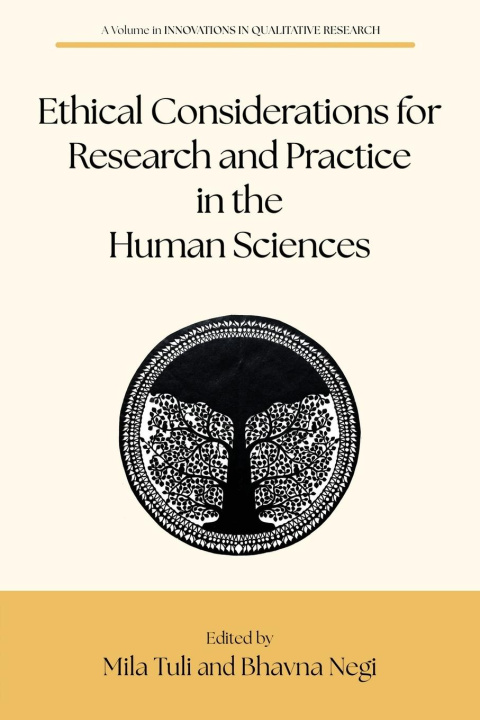
Книга Ethical Considerations for Research and Practice in the Human Sciences Mila Tuli

Ethical Considerations for Research and Practice in the Human Sciences

Автор: Mila Tuli
Език: Английски език
Корици: С меки корици
Издател: Information Age Publishing
Наличност: Външен склад
Изпращаме след 14-21 дни
60.17 117.69 лв
Research in the Human Sciences is constantly evolving, and its challenges multiply as we increasingl...

Информация за книгата

Автор
Език
Английски език
Корици
Книга - С меки корици
Издадена
2024
страници
298
EAN
9798887308623
Enbook ID
46940541
Теглоt
456
Размери
156 x 234 x 16

Пълно описание

Research in the Human Sciences is constantly evolving, and its challenges multiply as we increasingly acknowledge the complexities and diversity of human existence. Research is an integral activity in institutions of higher education. Every discipline sets its own standards, protocols and ethical considerations while engaging in research. Research ethics are interpreted at institutional and departmental levels to establish what constitutes reliable, replicable and responsible paradigms. Human interactions are inherently dynamic and are embedded in the social, ecological and cultural settings in which they occur. As researchers, we are obligated to ensure that every aspect of our enquiry is grounded in the recognition, disclosure, and dissemination of truth, safeguarding a culturally accurate representation of persons and phenomena. To be accurate and authentic any enquiry must begin with an understanding and exploration of these realities. Social research typically addresses complex problems for which there may not be clear ethical guidelines available.

The book offers an understanding of research ethics and practice in the human sciences through an examination of the epistemology of ethics, the diverse learnings from nuanced field practices and the link between the two. The chapters in the volume review the homogenisation of research paradigms, procedures and the complex issues of the social and human sciences using a critical lens. The authors explore the multiple elements of research ethics, several of which co-exist despite being contradictory. Accounts of research experiences from the contributing authors highlight the variations in research settings and the importance of developing reflexive and responsive research processes. The role of established protocols for research ethics and the contribution of Institutional Review Boards in promoting an over simplified, bureaucratized approach to researching human communities is critiqued through diverse field experiences.