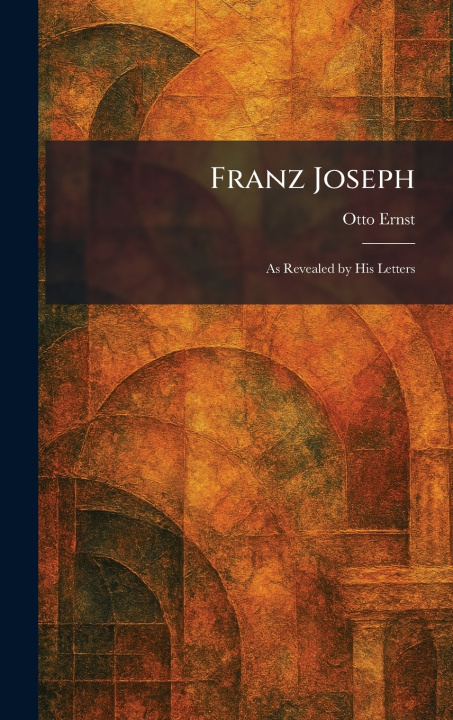
"Franz Joseph: As Revealed by His Letters" offers an intimate and revealing portrait of one of the longest-reigning monarchs in European history. Through a carefully curated selection of personal correspondence, this work pulls back the veil on the enigmatic Emperor of Austria and King of Hungary, whose life was defined by both imperial duty and profound personal tragedy. Otto Ernst provides the necessary context to understand the man behind the crown, showcasing Franz Joseph I not merely as a political figurehead but as a complex individual navigating the turbulent waters of the 19th and early 20th centuries.
The letters within this collection illuminate the Emperor's relationships with his family, his perspectives on the evolving geopolitical landscape of the Austro-Hungarian Empire, and his steadfast commitment to the Habsburg tradition. Readers will find a unique historical perspective on the inner workings of one of the world's most influential dynasties during its final decades. This volume serves as an essential resource for those interested in European royalty, diplomatic history, and the personal motivations of a ruler whose reign shaped the modern map of Central Europe. It is a compelling testament to the human element of statecraft and the private burdens of public power.
This work has been selected by scholars as being culturally important, and is part of the knowledge base of civilization as we know it. This work was reproduced from the original artifact, and remains as true to the original work as possible. Therefore, you may see the original copyright references, library stamps (as most of these works have been housed in our most important libraries around the world), and other notations in the work.
This work is in the public domain in the United States of America, and possibly other nations. Within the United States, you may freely copy and distribute this work, as no entity (individual or corporate) has a copyright on the body of the work.
As a reproduction of a historical artifact, this work may contain missing or blurred pages, poor pictures, errant marks, etc. Scholars believe, and we concur, that this work is important enough to be preserved, reproduced, and made generally available to the public. We appreciate your support of the preservation process, and thank you for being an important part of keeping this knowledge alive and relevant.