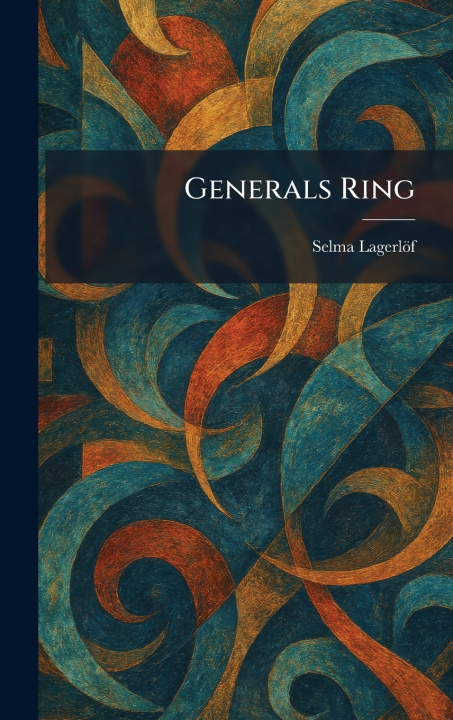
"Generals Ring" is a haunting supernatural mystery by the Nobel Prize-winning author Selma Lagerlöf. Set in eighteenth-century Sweden, the story begins with General Löwensköld, a distinguished soldier who is buried with a precious signet ring gifted to him by King Charles XII. When the tomb is violated and the ring is stolen, a chilling curse is unleashed upon those who possess it, stretching across generations.
Blending elements of folk legend, gothic horror, and psychological depth, "Generals Ring" explores the heavy burden of guilt and the inexorable reach of the past. Lagerlöf's masterful storytelling brings to life the superstitious landscape of rural Sweden, where the boundary between the living and the dead is perilously thin. As a family struggles to rid themselves of the vengeful spirit and the misfortune tied to the stolen heirloom, the narrative delves into the complexities of human nature and the consequences of greed.
This compelling novella serves as the opening volume of the acclaimed Löwensköld trilogy. It remains a cornerstone of Scandinavian literature, showcasing Lagerlöf's unique ability to weave together historical realism with the ethereal atmosphere of a classic ghost story.
This work has been selected by scholars as being culturally important, and is part of the knowledge base of civilization as we know it. This work was reproduced from the original artifact, and remains as true to the original work as possible. Therefore, you may see the original copyright references, library stamps (as most of these works have been housed in our most important libraries around the world), and other notations in the work.
This work is in the public domain in the United States of America, and possibly other nations. Within the United States, you may freely copy and distribute this work, as no entity (individual or corporate) has a copyright on the body of the work.
As a reproduction of a historical artifact, this work may contain missing or blurred pages, poor pictures, errant marks, etc. Scholars believe, and we concur, that this work is important enough to be preserved, reproduced, and made generally available to the public. We appreciate your support of the preservation process, and thank you for being an important part of keeping this knowledge alive and relevant.