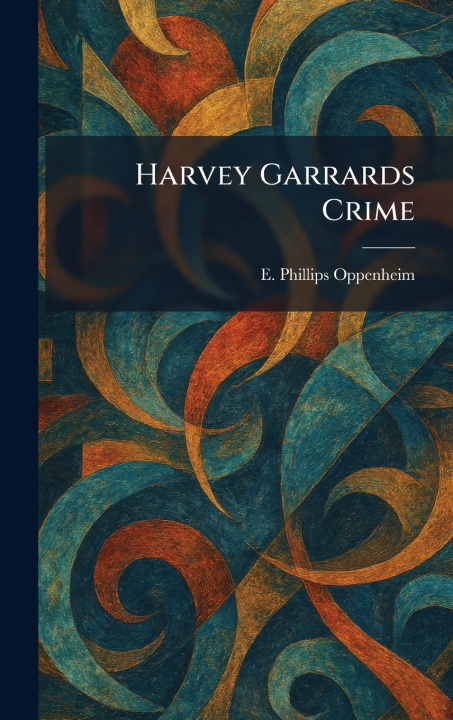
"Harvey Garrard's Crime" is a gripping tale of suspense and moral reckoning from the prolific pen of E. Phillips Oppenheim. The story follows Harvey Garrard, a man of standing whose life is suddenly upended by a momentary lapse in judgment. Faced with financial ruin that threatens his family's legacy and his own social standing, Garrard commits a desperate act of embezzlement. What begins as a calculated risk soon spirals into a complex web of blackmail, hidden secrets, and psychological torment.
As the "Prince of Storytellers," Oppenheim masterfully weaves a narrative that explores the thin line between respectability and criminality. The novel delves into the high-stakes world of finance and the personal consequences of one's actions, keeping readers on the edge of their seats with unexpected twists and a mounting sense of dread. "Harvey Garrard's Crime" stands as a quintessential example of early 20th-century mystery fiction, showcasing Oppenheim's ability to blend social commentary with thrilling plot developments. This work remains a compelling exploration of guilt, redemption, and the lengths a man will go to protect his honor in the face of inevitable exposure.
This work has been selected by scholars as being culturally important, and is part of the knowledge base of civilization as we know it. This work was reproduced from the original artifact, and remains as true to the original work as possible. Therefore, you may see the original copyright references, library stamps (as most of these works have been housed in our most important libraries around the world), and other notations in the work.
This work is in the public domain in the United States of America, and possibly other nations. Within the United States, you may freely copy and distribute this work, as no entity (individual or corporate) has a copyright on the body of the work.
As a reproduction of a historical artifact, this work may contain missing or blurred pages, poor pictures, errant marks, etc. Scholars believe, and we concur, that this work is important enough to be preserved, reproduced, and made generally available to the public. We appreciate your support of the preservation process, and thank you for being an important part of keeping this knowledge alive and relevant.