How does a great empire collapse and why do so many believe its fall was inevitable?
For more than six centuries, the Ottoman Empire stood at the crossroads of Europe, Asia, and Africa. It governed vast territories, commanded strategic waterways, and ruled over diverse peoples through a complex web of institutions. Yet by the nineteenth century, European diplomats, journalists, and politicians increasingly referred to it as "the Sick Man of Europe."
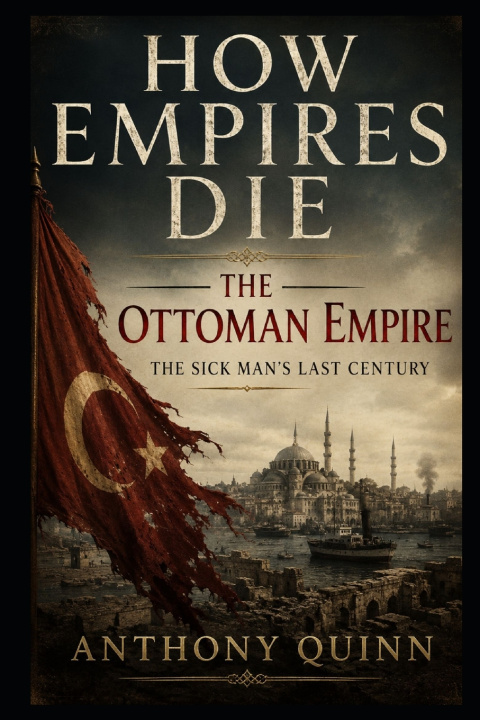
In How Empires Die: The Ottoman Empire - The Sick Man's Last Century, historian Anthony Quinn examines the empire's dramatic final century, revealing a story far more complex than simple decline.
From the reforms of Sultan Selim III and Mahmud II to the sweeping Tanzimat era, from the rise of Muhammad Ali in Egypt to the Crimean War and the surge of nationalist movements across the Balkans, this book explores how Ottoman leaders struggled to modernize, preserve sovereignty, and navigate the ambitions of rival great powers.
Readers will discover:
- The origins of the famous "Sick Man of Europe" label and its political consequences
- How reform-minded sultans attempted to modernize the military, bureaucracy, and economy
- The role of European diplomacy, media, and public opinion in shaping Ottoman fortunes
- The challenges posed by provincial strongmen, nationalist revolts, and foreign intervention
- Why the empire's collapse was neither simple nor inevitable
Drawing on contemporary accounts, diplomatic reports, and modern scholarship, this book presents the Ottoman Empire not as a passive victim of decline, but as a state that fought, adapted, and endured far longer than many expected.
Perfect for readers of world history, military history, geopolitical studies, and the rise and fall of civilizations.
The story of the Ottoman Empire's last century is not merely about collapse it is about resilience, reform, and the struggle to survive in an age of empires.