Artificial intelligence is changing the world. It is transforming education, work, business, writing, creativity, communication, leadership, and daily life. But behind the excitement of this new technological revolution, one deeper question must be asked:
Will artificial intelligence replace only human jobs, or could it also begin to replace the human mind?
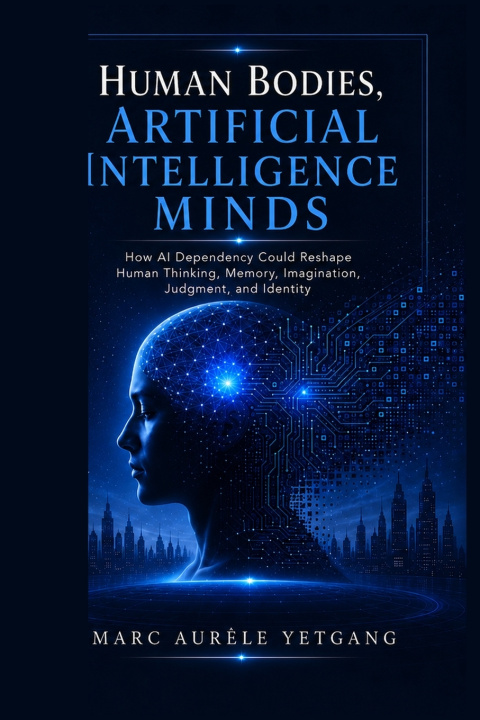
Human Bodies, Artificial Intelligence Minds is a powerful warning, reflection, and solution-oriented book about the danger of AI dependency. Marc Aurele Yetgang argues that the greatest danger of artificial intelligence is not simply automation, but the possibility that human beings may stop thinking, remembering, imagining, judging, questioning, and creating for themselves.
This book is not against artificial intelligence. It is against the misuse of artificial intelligence.
AI can help students learn, workers become more productive, writers organize their ideas, businesses grow, and governments improve decision-making. But if AI is used as a replacement for the human mind instead of an assistant, it can weaken the very abilities that define human identity.
What happens when students can no longer learn without AI?
What happens when writers lose their own voice?
What happens when workers cannot decide without AI?
What happens when leaders surrender judgment to machines?
What happens when people stop remembering, imagining, and questioning for themselves?
This book explores how AI dependency could reshape human thinking, memory, imagination, judgment, and identity. It presents a serious idea: a person can still have a human body while slowly developing an artificial intelligence mind if their inner life becomes dependent on AI-generated thoughts, words, decisions, and imagination.
With a simple, deep, and prophetic tone, this book calls students, parents, teachers, workers, leaders, governments, and AI companies to protect the human mind. It also provides practical activities, reflection questions, and rules for using AI wisely without losing mental independence.
The message is clear: use artificial intelligence, but never let artificial intelligence become your identity.
AI should assist the human mind.
AI should not replace the human mind.