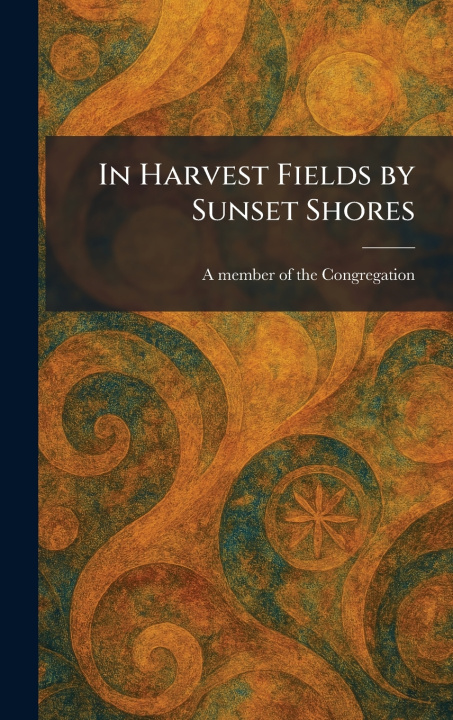
"In Harvest Fields by Sunset Shores" is an evocative and historical account detailing the spiritual and communal journey of a religious congregation in the early twentieth century. Written by a member of the community, this work chronicles the growth and mission of faith-driven individuals who sought to establish roots and serve their neighbors along the Pacific coast. The narrative captures the essence of religious life during this transformative era, focusing on the dedication, hardships, and triumphs of those working in the spiritual and social harvest fields of the American West.
Through personal reflections and historical documentation, the book explores the foundational values of the congregation, illustrating how their faith translated into tangible service in education, healthcare, and community outreach. It serves as a vital record of the Catholic Church's expansion and the specific contributions of women religious to the development of regional society. Readers interested in ecclesiastical history, the sociology of religious movements, or the pioneering spirit of the 1920s will find this work to be a poignant testament to a life of service and the enduring power of a shared spiritual vision.
This work has been selected by scholars as being culturally important, and is part of the knowledge base of civilization as we know it. This work was reproduced from the original artifact, and remains as true to the original work as possible. Therefore, you may see the original copyright references, library stamps (as most of these works have been housed in our most important libraries around the world), and other notations in the work.
This work is in the public domain in the United States of America, and possibly other nations. Within the United States, you may freely copy and distribute this work, as no entity (individual or corporate) has a copyright on the body of the work.
As a reproduction of a historical artifact, this work may contain missing or blurred pages, poor pictures, errant marks, etc. Scholars believe, and we concur, that this work is important enough to be preserved, reproduced, and made generally available to the public. We appreciate your support of the preservation process, and thank you for being an important part of keeping this knowledge alive and relevant.