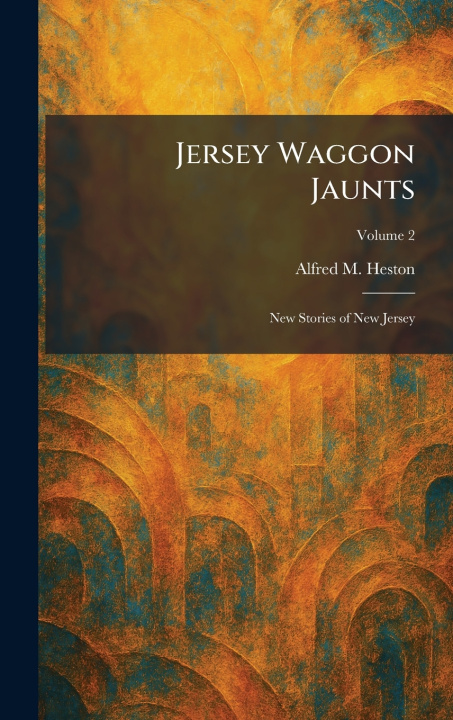
"Jersey Waggon Jaunts: New Stories of New Jersey" (Volume 2) is an engaging collection of historical anecdotes, local legends, and cultural sketches compiled by the prominent historian Alfred M. Heston. This volume offers a deep dive into the diverse heritage of New Jersey, weaving together narrative accounts that highlight the state's unique character and pivotal role in American history. Through a series of "jaunts," Heston brings to life the stories of the people and places that define the Garden State, ranging from revolutionary heroes to local folk figures.
The work provides a rich tapestry of social history, covering various regions of the state with a focus on Atlantic City and the surrounding coastal areas. Heston's writing style combines the rigor of historical investigation with the charm of oral tradition, making these stories accessible to both scholars and casual readers. "Jersey Waggon Jaunts" serves as an essential record of the traditions, myths, and historical milestones that have shaped the identity of New Jersey. This volume remains an invaluable resource for anyone interested in regional American history, folklore, and the preservation of local heritage.
This work has been selected by scholars as being culturally important, and is part of the knowledge base of civilization as we know it. This work was reproduced from the original artifact, and remains as true to the original work as possible. Therefore, you may see the original copyright references, library stamps (as most of these works have been housed in our most important libraries around the world), and other notations in the work.
This work is in the public domain in the United States of America, and possibly other nations. Within the United States, you may freely copy and distribute this work, as no entity (individual or corporate) has a copyright on the body of the work.
As a reproduction of a historical artifact, this work may contain missing or blurred pages, poor pictures, errant marks, etc. Scholars believe, and we concur, that this work is important enough to be preserved, reproduced, and made generally available to the public. We appreciate your support of the preservation process, and thank you for being an important part of keeping this knowledge alive and relevant.