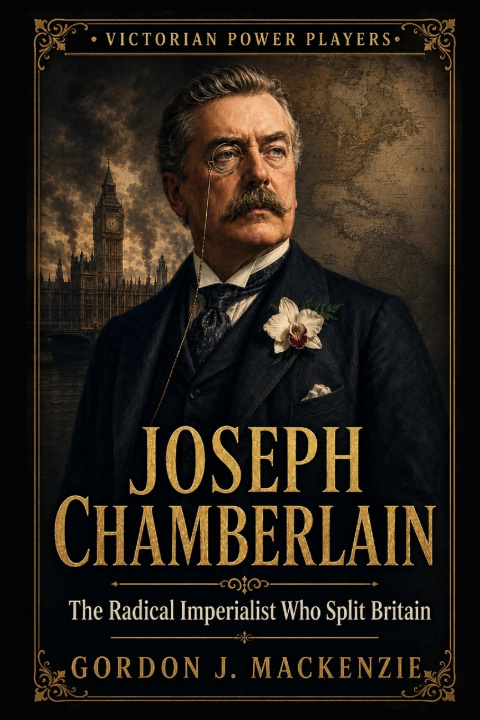
Joseph Chamberlain was one of the most forceful British politicians never to become Prime Minister.
He began as the great civic reformer of Birmingham, a radical mayor who believed that public power could transform urban life. Gas, water, streets, schools, sanitation, and municipal pride were not small administrative matters to him. They were proof that government could act, improve, and command.
But Chamberlain did not remain only a municipal reformer. He carried the same restless energy into national politics, where he became one of the leading radical Liberals of his age. Then came Ireland. When William Gladstone embraced Home Rule, Chamberlain broke with him, helped split the Liberal Party, and became one of the central architects of Liberal Unionism.
From there, his career moved into empire. As Colonial Secretary, Chamberlain gave the British Empire a new public urgency. He wanted the colonies drawn closer, imperial policy made more deliberate, and Britain prepared for a harsher age of industrial and global competition. His imperial vision brought energy and ambition, but also controversy, especially through South Africa and the Boer War.
His final great campaign, tariff reform, challenged Britain's free-trade orthodoxy and sought to bind the empire through economic preference. It divided Unionism, revived Liberal opposition, and left his last mission unfinished after the stroke that ended his active public life.
This book tells the story of Joseph Chamberlain as reformer, organiser, Unionist, imperialist, party-breaker, and founder of a political dynasty. It follows the man from Birmingham to Westminster, from radicalism to empire, and from civic improvement to one of the great unresolved arguments of modern British politics.
Chamberlain did not simply reflect his age. He forced its contradictions into the open.