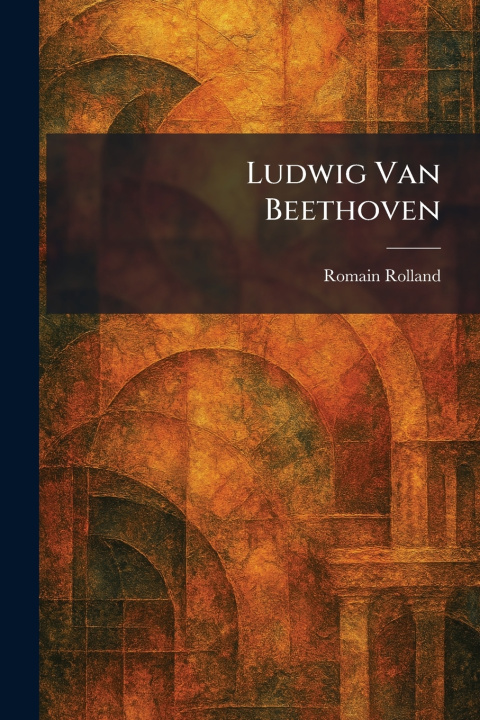
"Ludwig Van Beethoven" is a profound and passionate exploration of the life and legacy of one of history's most influential musical geniuses. Written by the Nobel Prize-winning author Romain Rolland, this work transcends the boundaries of a traditional biography, offering a deeply emotional and philosophical study of the composer's indomitable spirit. Rolland depicts Beethoven not merely as a creator of symphonies, but as a heroic figure who triumphed over profound physical suffering and personal isolation to bequeath universal joy to humanity.
The narrative delves into the core of Beethoven's creative process, highlighting his struggles with encroaching deafness and his unwavering commitment to his artistic vision. Through Rolland's lyrical prose, readers gain intimate insight into the composer's character, his turbulent relationships, and the historical landscape of the 19th century. This classic text remains a cornerstone of musical literature, capturing the essence of the man behind the music and the spiritual power of his compositions.
A testament to the resilience of the human will, "Ludwig Van Beethoven" is an essential read for music lovers, historians, and anyone seeking inspiration from a life dedicated to artistic excellence and moral courage.
This work has been selected by scholars as being culturally important, and is part of the knowledge base of civilization as we know it. This work was reproduced from the original artifact, and remains as true to the original work as possible. Therefore, you may see the original copyright references, library stamps (as most of these works have been housed in our most important libraries around the world), and other notations in the work.
This work is in the public domain in the United States of America, and possibly other nations. Within the United States, you may freely copy and distribute this work, as no entity (individual or corporate) has a copyright on the body of the work.
As a reproduction of a historical artifact, this work may contain missing or blurred pages, poor pictures, errant marks, etc. Scholars believe, and we concur, that this work is important enough to be preserved, reproduced, and made generally available to the public. We appreciate your support of the preservation process, and thank you for being an important part of keeping this knowledge alive and relevant.