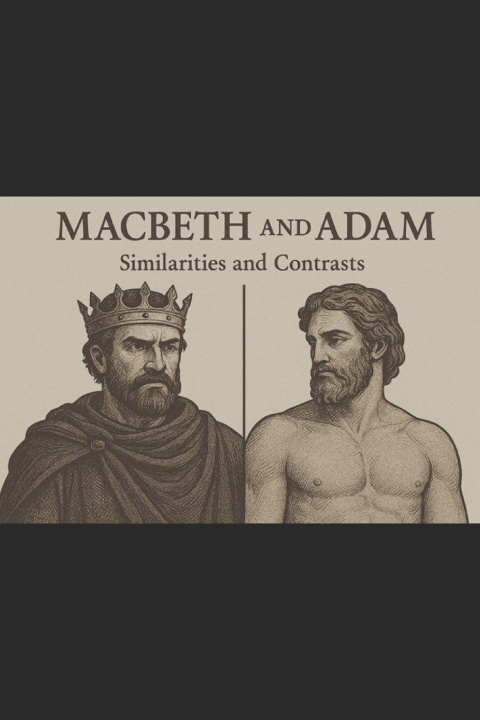
What happens when a human being stands at the edge of power-when prophecy, promise, and desire begin to speak louder than conscience?
In Macbeth and Adam, Mohammad Ishtiyaq Hossain offers a bold comparative reading of Shakespeare's Macbeth alongside the Qur'anic narrative of Adam. Both stories begin in honour, both confront seduction by persuasive voices, and both turn on the same human vulnerability: the longing for permanence-security, authority, immortality-without the burden of restraint.
With literary precision and philosophical depth, this book traces how illusion distorts time, manufactures certainty, and converts ambition into addiction. It then draws the decisive contrast: Macbeth escalates into tyranny until meaning collapses into nihilism; Adam recognises exposure, turns toward repentance, and preserves the possibility of return.
At once a study of tragedy and a meditation on guidance, Macbeth and Adam reveals why the human condition is not defined by falling, but by what follows.
In this book you will explore: