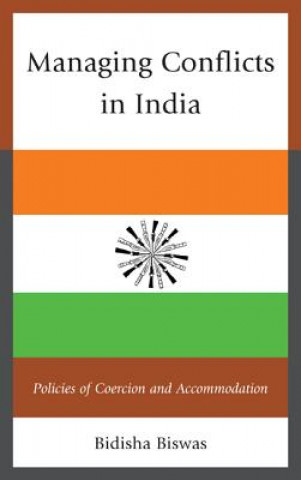
Bidisha Biswas explores the question of how a democratic state chooses between policies of coercion and accommodation when dealing with political violence by addressing an important, yet under examined, topic-India' approach to internal conflicts. In Managing Conflicts in India, Biswas selects three cases of conflict: the separatist campaign in Punjab during the 1980s; the protracted insurgency in Kashmir; and attacks on the Indian state by left-wing extremists, also known as Maoists and Naxalites, a campaign that has existed in different forms since the 1960s. Using archival research and fieldwork, Biswas shows that the Indian state has chosen a mix of tactics in dealing with these insurgencies. She argues that the government's responses have often been dictated by immediate political concerns, rather than a strategic vision. While the integrity of the Indian state remains intact, its democratic quality and credibility have been seriously compromised. By focusing on the choices-and missteps-that the Indian government has made, Biswas sheds light not only on the insurgencies themselves, but also on the overall processes that impact effective conflict management.