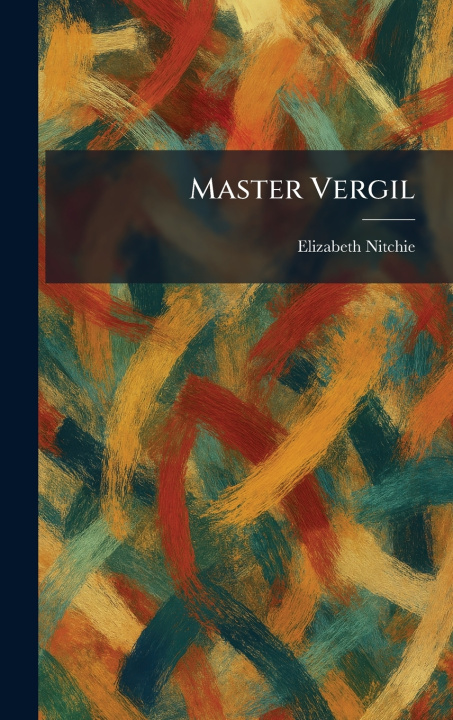
"Master Vergil" is a comprehensive scholarly examination of the enduring legacy and profound influence of the Roman poet Vergil. Written by Elizabeth Nitchie, this work traces the poet's reception across centuries of literary history, with a specialized focus on his impact on English poets and writers. From his status as a mystical figure in the Middle Ages to his role as the supreme model of poetic form during the Renaissance and beyond, the book illustrates how Vergil has remained a central pillar of Western literature.
Nitchie provides an in-depth analysis of how Vergil's major works-"The Aeneid", "The Eclogues", and "The Georgics"-have been interpreted, translated, and reimagined by successive generations. By exploring the evolution of his reputation and the specific literary echoes found in the works of major English authors, "Master Vergil" offers readers a deep understanding of the classical foundations of the English canon. This work is an essential resource for students of classical studies and English literature, celebrating the timeless art of a poet whose voice has shaped the creative imagination for two millennia.
This work has been selected by scholars as being culturally important, and is part of the knowledge base of civilization as we know it. This work was reproduced from the original artifact, and remains as true to the original work as possible. Therefore, you may see the original copyright references, library stamps (as most of these works have been housed in our most important libraries around the world), and other notations in the work.
This work is in the public domain in the United States of America, and possibly other nations. Within the United States, you may freely copy and distribute this work, as no entity (individual or corporate) has a copyright on the body of the work.
As a reproduction of a historical artifact, this work may contain missing or blurred pages, poor pictures, errant marks, etc. Scholars believe, and we concur, that this work is important enough to be preserved, reproduced, and made generally available to the public. We appreciate your support of the preservation process, and thank you for being an important part of keeping this knowledge alive and relevant.