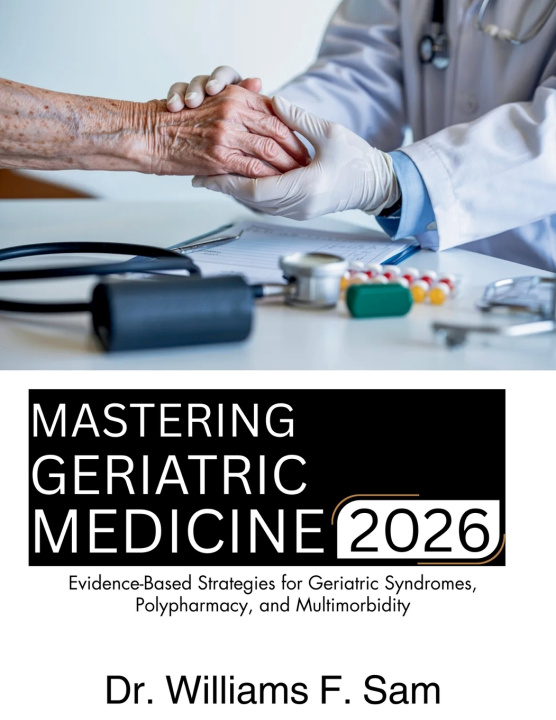
Caring for older adults is rarely straightforward. The patient in front of you may have falls, memory concerns, weight loss, incontinence, dizziness, insomnia, chronic pain, and a medication list that keeps growing with every specialty visit. In real practice, the challenge is not simply knowing the diagnosis. It is sorting out what matters most, recognizing what is reversible, avoiding harm, and making decisions that fit the patient's function, goals, and overall prognosis.
MASTERING GERIATRIC MEDICINE was written for that reality.
This book is a practical, clinically grounded guide for physicians, residents, fellows, nurse practitioners, physician associates/assistants, pharmacists, and trainees who care for older adults in hospitals, clinics, long-term care settings, and training programs. Rather than reading like a dense textbook or a generic review manual, it is built around the way geriatric medicine is actually practiced: identifying syndromes early, thinking across multiple conditions at once, simplifying treatment plans, and making sound decisions in patients who do not fit neatly into single-disease guidelines.
Inside, readers will find a clear, organized approach to the problems that consume the most time and attention in everyday geriatric care: delirium, dementia, falls, frailty, functional decline, urinary symptoms, sleep disturbance, malnutrition, depression, pain, pressure injuries, mobility limitations, and the complex prescribing decisions that come with polypharmacy and multimorbidity. The emphasis throughout is bedside usefulness. The goal is to help clinicians move from scattered information to a practical plan they can apply in real time.
What makes this book especially useful is its focus on clinical judgment. Older adults often present with subtle findings, overlapping syndromes, and competing priorities. This text helps readers think through those situations efficiently, with evidence-based strategies for differential diagnosis, medication review, risk assessment, and management planning. It addresses not only what to do, but how to prioritize when the patient has several active problems at once.
Inside this book, you will discover:
- Concise, evidence-based guidance on common geriatric syndromes
- Practical algorithms for evaluation and management
- Case-based reasoning that reflects real hospital and outpatient scenarios
- Deprescribing frameworks and medication safety strategies
- Differential diagnosis support for common but easily missed presentations
- Functional, cognitive, and frailty-focused assessment tools
- Bedside references and workflow-friendly summaries for busy clinical settings
- High-yield review points useful for training, certification, and board preparation
The tone is deliberately practical. This is not a book that assumes unlimited time, perfect follow-up, or textbook presentations. It recognizes the realities of inpatient consults, primary care visits, rehab transitions, family meetings, and medication reconciliation in patients with long problem lists and limited physiologic reserve. It is designed to help readers think more clearly, work more efficiently, and make decisions that are safer and better aligned with what matters to older patients.
Whether you are a resident trying to build confidence on the wards, a primary care clinician managing increasingly complex older adults in clinic, an advanced practice clinician looking for a reliable day-to-day reference, or an experienced physician who wants a more structured approach to geriatric decision-making, MASTERING GERIATRIC MEDICINE offers a resource that is both accessible and clinically substantial.