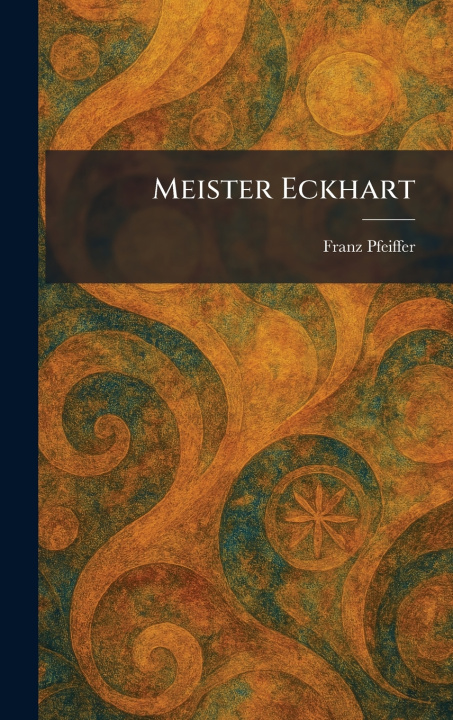
"Meister Eckhart" presents the profound spiritual and philosophical insights of one of the Middle Ages' most influential figures. This collection, based on the foundational scholarship of Franz Pfeiffer, brings together the sermons, tracts, and sayings of the 13th-century German Dominican friar whose work bridged the gap between scholastic theology and direct mystical experience. Known for his radical approach to the nature of the soul and its union with the divine, Eckhart's teachings emphasize the "birth of the Word in the soul" and the necessity of detachment.
The text explores complex themes such as the Godhead, the relationship between the Creator and the created, and the inner path to spiritual enlightenment. Eckhart's unique voice-simultaneously intellectual and deeply devotional-offers a transformative perspective on the Christian life, focusing on the presence of God within the human heart. His ideas have had a lasting impact on Western philosophy and spirituality, influencing thinkers from the late medieval period to the modern era. This volume serves as an essential resource for those interested in medieval history, theology, and the enduring legacy of Christian mysticism.
This work has been selected by scholars as being culturally important, and is part of the knowledge base of civilization as we know it. This work was reproduced from the original artifact, and remains as true to the original work as possible. Therefore, you may see the original copyright references, library stamps (as most of these works have been housed in our most important libraries around the world), and other notations in the work.
This work is in the public domain in the United States of America, and possibly other nations. Within the United States, you may freely copy and distribute this work, as no entity (individual or corporate) has a copyright on the body of the work.
As a reproduction of a historical artifact, this work may contain missing or blurred pages, poor pictures, errant marks, etc. Scholars believe, and we concur, that this work is important enough to be preserved, reproduced, and made generally available to the public. We appreciate your support of the preservation process, and thank you for being an important part of keeping this knowledge alive and relevant.