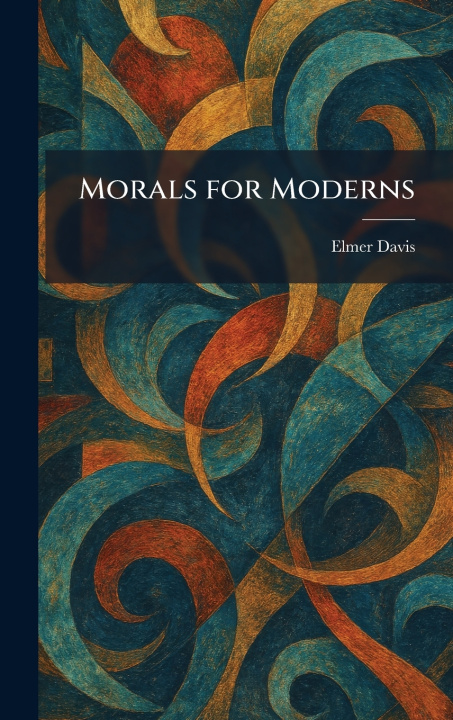
"Morals for Moderns" is a sharp and insightful collection of stories by Elmer Davis that captures the shifting ethical landscape of the early twentieth century. Written during a period of profound social transformation, this work examines the clash between traditional values and the burgeoning freedoms of the post-World War I era. Through a series of witty and observational narratives, Davis explores how the "modern" individual navigates the complexities of relationships, personal integrity, and social expectations in an increasingly secular and fast-paced world.
The stories within "Morals for Moderns" delve into the lives of characters struggling to find a moral compass when the rigid rules of the past no longer seem to apply. Davis uses satire and keen social commentary to highlight the ironies and contradictions of the Jazz Age, from the pressures of urban life to the changing dynamics of marriage and career. This collection serves as a vibrant literary portrait of American life in the 1920s and 30s, offering a timeless exploration of how society redefines its standards of conduct in the face of cultural progress. It remains an essential work for readers interested in the evolution of social mores and the enduring human quest for a meaningful life.
This work has been selected by scholars as being culturally important, and is part of the knowledge base of civilization as we know it. This work was reproduced from the original artifact, and remains as true to the original work as possible. Therefore, you may see the original copyright references, library stamps (as most of these works have been housed in our most important libraries around the world), and other notations in the work.
This work is in the public domain in the United States of America, and possibly other nations. Within the United States, you may freely copy and distribute this work, as no entity (individual or corporate) has a copyright on the body of the work.
As a reproduction of a historical artifact, this work may contain missing or blurred pages, poor pictures, errant marks, etc. Scholars believe, and we concur, that this work is important enough to be preserved, reproduced, and made generally available to the public. We appreciate your support of the preservation process, and thank you for being an important part of keeping this knowledge alive and relevant.