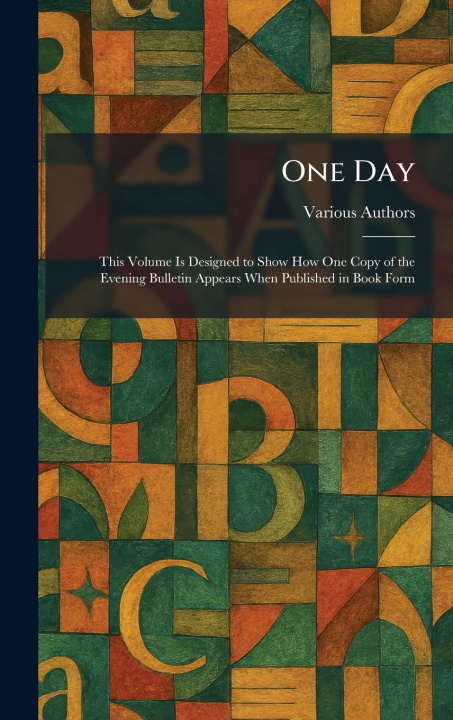
"One Day" presents a fascinating and comprehensive look at the landscape of American life in the late 1920s by compiling the entire contents of a single day's edition of the Philadelphia "Evening Bulletin" into a book format. This volume serves as a powerful testament to the massive scale of daily journalism during the era, offering readers an unfiltered view of the news, culture, and commerce of the time.
From breaking international headlines and local political developments to the ephemeral details of period advertisements and social announcements, the work captures the pulse of a city and a nation. By transforming a transient daily newspaper into a permanent record, "One Day" allows for a deep dive into the historical context of 1929. Scholars of media history, urban development, and social history will find this collection invaluable for understanding the role of the press in early 20th-century society. It stands as a unique primary source, preserving the collective voice of the journalists, editors, and advertisers who shaped the daily narrative for thousands of readers.
This work has been selected by scholars as being culturally important, and is part of the knowledge base of civilization as we know it. This work was reproduced from the original artifact, and remains as true to the original work as possible. Therefore, you may see the original copyright references, library stamps (as most of these works have been housed in our most important libraries around the world), and other notations in the work.
This work is in the public domain in the United States of America, and possibly other nations. Within the United States, you may freely copy and distribute this work, as no entity (individual or corporate) has a copyright on the body of the work.
As a reproduction of a historical artifact, this work may contain missing or blurred pages, poor pictures, errant marks, etc. Scholars believe, and we concur, that this work is important enough to be preserved, reproduced, and made generally available to the public. We appreciate your support of the preservation process, and thank you for being an important part of keeping this knowledge alive and relevant.