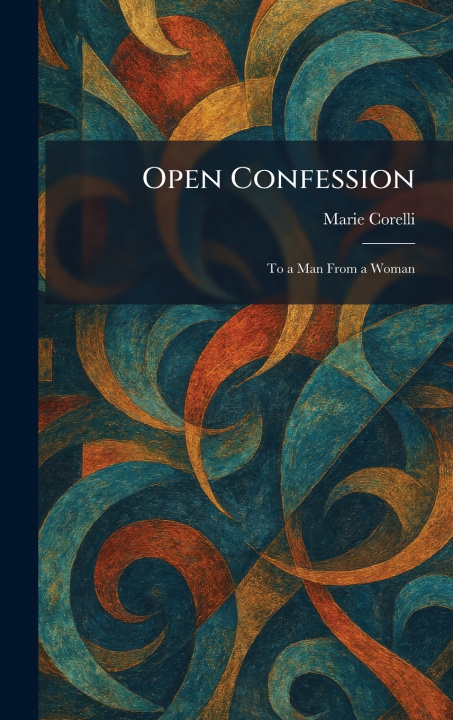
"Open Confession : To a Man From a Woman" is a poignant and intensely personal exploration of love, devotion, and the complexities of the human heart. Written by the celebrated Marie Corelli, this work takes the form of a soul-baring revelation from a woman to the man who holds her deepest affections. Through a series of evocative and rhythmic passages, the narrative delves into the nuances of unrequited longing and the spiritual weight of silent suffering.
Corelli, known for her mastery of melodrama and her ability to capture Victorian and Edwardian sensibilities, offers a profound meditation on the female experience. The work stands as a testament to the enduring power of romantic idealism and the vulnerability inherent in speaking one's truth. Readers will find themselves drawn into a world of heightened emotion where the boundaries between prose and poetry often blur, reflecting the intensity of the speaker's passion.
A significant piece of early 20th-century literature, "Open Confession" provides insight into the themes that defined Corelli's career: the search for connection, the sanctity of love, and the internal struggles of the individual against the constraints of society. It remains a compelling read for those interested in classic romance and the literary legacy of one of the era's most popular authors.
This work has been selected by scholars as being culturally important, and is part of the knowledge base of civilization as we know it. This work was reproduced from the original artifact, and remains as true to the original work as possible. Therefore, you may see the original copyright references, library stamps (as most of these works have been housed in our most important libraries around the world), and other notations in the work.
This work is in the public domain in the United States of America, and possibly other nations. Within the United States, you may freely copy and distribute this work, as no entity (individual or corporate) has a copyright on the body of the work.
As a reproduction of a historical artifact, this work may contain missing or blurred pages, poor pictures, errant marks, etc. Scholars believe, and we concur, that this work is important enough to be preserved, reproduced, and made generally available to the public. We appreciate your support of the preservation process, and thank you for being an important part of keeping this knowledge alive and relevant.