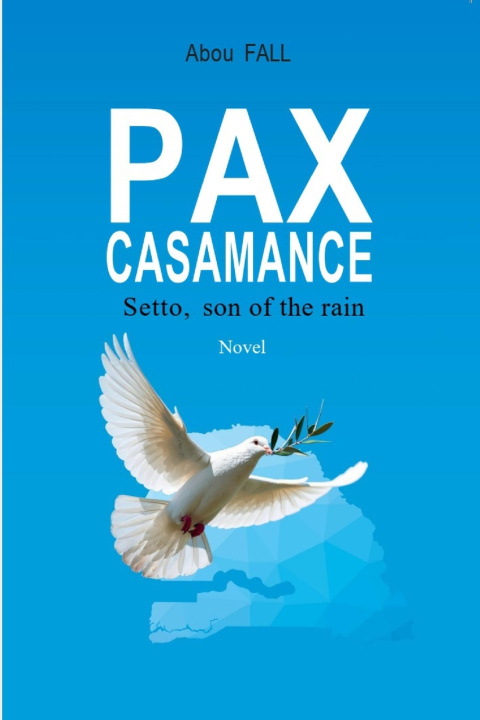
The life of Setto, son of the rain, is intertwined with the intimate history of his young nation, marked by bursts of construction and moments of rupture. Building a nation means, first and foremost, accepting its incompleteness: a living work in progress, never finished, shaped by memory, culture, and external forces. But when violence intrudes on this process, it reveals an aporia, an irresolvable contradiction, since it destroys what it claims to build.
In a meditative prose, the novel explores the fragility of unity amidst diversity and measures the human cost of conflict, against the backdrop of the Casamance conflict. Through Setto's journey, it examines silences, wounds, and legacies, while stubbornly seeking the possibility of a shared bond.
More than a narrative, it is a call to action: the audacity to sow the seeds of peace, a simple yet revolutionary gesture in an increasingly polarized world. By paying tribute to a man who defended the nation's integrity, this novel reminds us that peace is not an abstract ideal, but the primary condition for sustainable progress and shared prosperity in Africa.