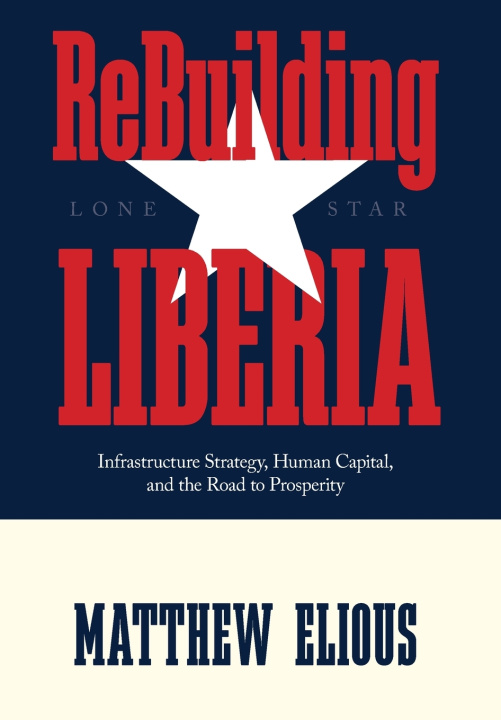
Liberia has survived civil war, Ebola, and economic shocks. What it has not yet built is the physical infrastructure that turns survival into widely shared prosperity. ReBuilding Liberia argues that the country's central development problem is not a shortage of plans or partners - it is the absence of a disciplined national system for execution that operates consistently, at scale, and across political cycles.
This book proposes such a system. It is a doctrine for rebuilding the nation through five integrated pillars: a National Development Service that mobilizes Liberian youth as the trained workforce of reconstruction; a permanent Corps of Engineers and Technicians as the technical backbone; the Liberia Geospatial Reference Framework and the Liberia OneMap Geospatial Portal as the measurement foundation on which every road, alignment, and design must rest; a corridor strategy that builds a balanced national road network anchored by secondary cities; and a Management Doctrine in which leadership is earned through field performance and ethical conduct rather than titles or connections.
Drawing on more than three decades in geodetic science, aerial surveying, and transportation infrastructure - and on a working national geospatial portal that is live and freely accessible at LrOneMap.com - Matthew W. Elious presents not a wish list but a system already in motion. The portal measures the road deficit precisely: of approximately 24,508 kilometers of mapped roads, more than 21,000 belong to the county-level network that cannot be maintained from Monrovia.
Written for the President of Liberia, his cabinet, donor partners, engineers, the diaspora, and a generation of young Liberians being asked to build their country, this is the doctrine of national reconstruction the ARREST Agenda calls for and the next generation must execute.