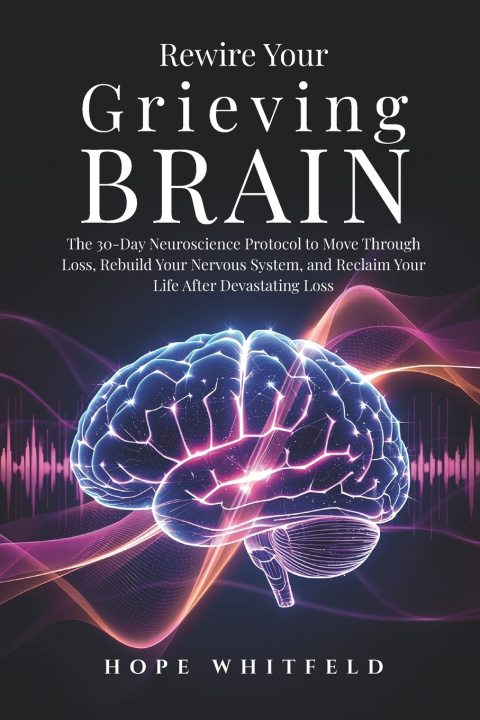
A 30-Day Neuroscience Protocol for Healing After Devastating Loss
Most grief resources focus on emotions. Rewire Your Grieving Brain starts where many others end: with your nervous system. Whether you are facing sudden bereavement, a long-anticipated goodbye, or the complicated aftermath of traumatic loss, the effects are not only emotional and psychological. They are neurological. When grief disrupts the brain's regulatory systems, memory becomes unreliable, mood swings sharpen, and tasks that once felt simple demand enormous effort. Attention drifts, and stress tolerance drops.
Left unaddressed, this neurobiological dysregulation can prolong suffering, limit daily functioning, and heighten vulnerability to medical complications. Over time, the resilience you need most begins to erode. This guide offers a structured, 30-day protocol to change that trajectory. Each phase is built on current neuroscience and designed for real-world use by people actively experiencing the weight of loss.
What You Will Learn
- How profound loss impacts the structure and chemistry of the brain, and why this alters memory, mood, and behavior in predictable, documented ways.
- A stepwise 30-day protocol divided into three phases: stabilization and safety (Days 1-10), neural repatterning and regulation (Days 11-20), and reconnection and functional recovery (Days 21-30).
- Practical daily brain retraining techniques designed for people experiencing the real symptoms of deep grief, including sleep disruption, emotional flooding, and cognitive fog.
- Daily monitoring templates and progress trackers so you can see what is improving and where to adjust your approach.
- Strategies for stabilizing your nervous system, managing setbacks, and addressing common challenges that arise during recovery.
- Methods to consolidate gains at the end of the protocol, allowing you to maintain progress and continue adapting as life moves forward.
Built for Complicated, Traumatic, and Anticipatory Grief
This guide is structured specifically for individuals navigating traumatic, anticipatory, or complicated grief. It recognizes the distinct ways these forms of loss can disrupt the nervous system and responds accordingly. It does not cover acute psychiatric crises, pharmacological therapies, or grief arising from non-death-related ambiguous losses. Its focus is deliberate: actionable neurorehabilitation methods that you can implement day by day, at home.
Each chapter presents an incremental process: first stabilize your system and restore a sense of safety, then repattern the neural circuits impacted by grief, then rebuild connection and functional capacity for daily life. Structured checklists, monitoring templates, and troubleshooting tools help you tailor the protocol to your actual needs at each stage.
Difficult days are part of loss, and this guide makes no promise of overnight transformation. But by understanding what is happening in your brain and responding with clear, evidence-informed action, you can significantly reduce suffering and foster constructive adaptation. Rewire Your Grieving Brain gives you the tools to do exactly that.