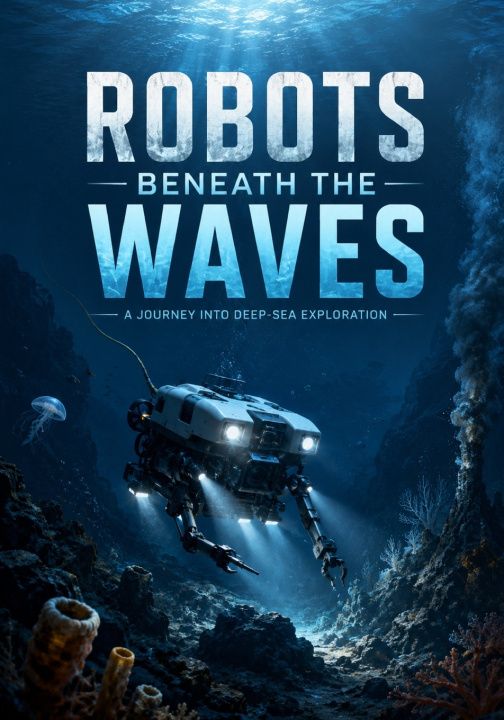
The ocean covers seventy percent of our planet, yet more of its floor remains unmapped than the surface of Mars. This book tells the story of how humanity is finally beginning to change that not with submarines or diving suits, but with robots. From the clumsy early machines of the 1960s to today's swarms of intelligent autonomous vehicles, it traces the engineering ingenuity, scientific ambition, and human determination that has made the deep ocean accessible for the first time in history. Readers will descend to hydrothermal vents teeming with life that should not exist, visit shipwrecks preserved in perfect darkness for centuries, and witness volcanic eruptions on the seafloor captured in real time by cameras no human eye could ever reach. The book explores not just what these robots have found but how they work how they navigate without GPS, communicate through water that blocks all radio signals, survive pressures that would crush a car, and increasingly think for themselves. It confronts the ethical questions that exploration inevitably raises: who owns what robots discover, whether the deep-sea ecosystems being revealed can survive commercial exploitation, and what responsibilities come with knowledge of a world so fragile and so unknown. Written for the curious non-specialist, it is ultimately a story about the oldest human impulse the need to go somewhere no one has gone before expressed through the newest and most extraordinary tools we have ever built.