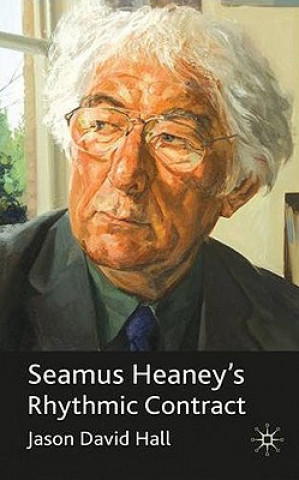
While glosses on Seamus Heaney's verse forms figure more or less significantly in critical accounts of his poetry, Seamus Heaney's Rhythmic Contract is the first book to take the craft of Heaney's art of its focus. Setting out a historically informed approach to poetic form, the book places Heaney's developing versification squarely in the context of the Belfast Group and mid-century Anglo-American theories of metre and rhythm. It also gives much needed attention to the poet's putatively free verse and to his most enduring form, the sonnet. Behind Heaney's metrical manoeuvres, the book argues, is his ongoing attempt to communicate with his readers. The 'contract' he extends to them is expressed first and foremost in the rhythmical structures of his poems themselves.