Stock market term itself is fascinating one and it attracts people from all walks of life. For some, it is a means of earning a livelihood; for others, it serves as a platform for investment, wealth creation, retirement planning, income generation, financial independence, personal interest, or build a professional career in the financial industry.
Regardless of their objectives, participants engage with the stock market to achieve financial goals, gain knowledge, and take part in the growth of businesses and the economy.
The stock market represents a marketplace where people can buy and sell shares of publicly traded companies. When an individual purchases a stock, they become a partial owner of that business. As the company grows its earnings, expands its operations, and increases its value, shareholders can benefit through rising stock prices and, in some cases, dividends. Understanding this ownership concept helps investors focus on the quality of businesses rather than short-term price fluctuations.
This book begins with an introduction to the stock market, the key terminologies commonly used in the financial markets, and the fundamental principles of investing. These introductory chapters are designed to provide a solid foundation for readers who are new to the world of stock market investing and trading.
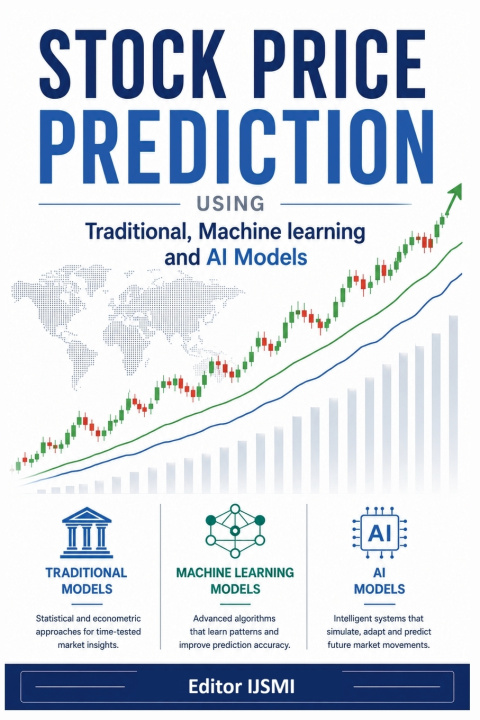
The primary focus of this book is to present an overview of the various models used for predicting stock price movements. Over the years, researchers and practitioners have developed numerous approaches to analyze market behavior and forecast future prices. This book explores these approaches in a systematic manner, beginning with traditional statistical models and progressing to machine learning techniques, deep learning architectures, and, finally, advanced Artificial Intelligence-based models.
By examining the strengths, limitations, and applications of these models, the book aims to provide readers with a comprehensive understanding of the evolution of stock price prediction methods and the role of modern computational intelligence in financial forecasting.