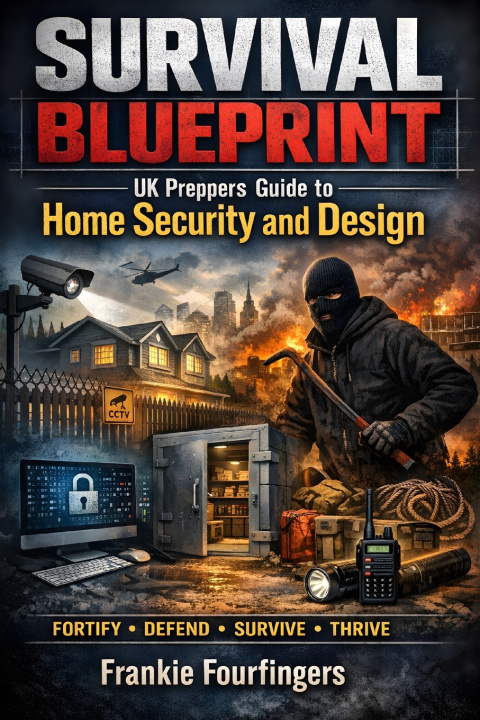
Survival Blueprint: UK Preppers Guide to Home Security and Design
A comprehensive manual for fortifying UK homes against crime, civil unrest, natural disasters, and societal collapse. It treats security as a multilayered discipline integrating physical, digital, and community resilience.
Core principles are risk posture, deterrence, detection, delay, and response. Most UK households face low to moderate threats from opportunistic crime, requiring a balanced approach to hardening without impractical fortification.
Risk assessment evaluates threats, vulnerabilities, and consequences using scoring systems to prioritise mitigation.
Perimeter security includes privacy-enhancing fencing, natural barriers (thorny hedges), strategic lighting with motion sensors, CCTV with real-time feeds, and smart intrusion alarms to minimise false alerts.
Architectural design applies Crime Prevention Through Environmental Design (CPTED)-defensible space, visible access paths, and limiting concealment. Safe rooms provide hardened strongholds with protected entry and concealed escape routes. Hidden compartments offer economical concealment for valuables.
Interior security includes risk-aware room arrangements, secure storage for hazardous items, and behavioural practices such as locking doors and household vigilance.
Cyber-physical convergence recognises smart device vulnerabilities. Network segmentation isolates IoT devices; device hardening changes defaults; backup power (UPS, generators) ensures continuity; and data protection limits cloud exposure.
Community resilience emphasises that prepared neighbourhoods outperform isolated households through communication protocols, resource sharing, and mutual aid pacts.
Utilities resilience covers electrical safety, backup power, water security (rainwater harvesting, seven-day storage), and heating continuity.
Environmental hardening addresses weather resilience, fire safety with smoke management, and pest prevention through cleanliness and barriers.
Legal compliance navigates UK property law, proportionality in surveillance, and planning regulations to preserve insurance validity.
Supply chain management details procurement strategies, tool maintenance, and stockpiling food, water, and medical supplies.
Training and drills institutionalise family preparedness through fire drills, defensive exercises, evacuation rehearsals, and first-aid/trauma care training, including triage protocols.
Scenario planning and red teaming stress-test security through adversarial exercises and after-action reviews for continuous improvement.
Ethics advocates responsible preparedness, strengthening community bonds, respecting human rights (particularly child safeguarding), and practising sustainable, legal modifications.
Financial planning treats security as an investment, employing cost-benefit analysis, risk transfer through insurance, and dedicated maintenance budgets.
Maintenance and documentation require systematic audits, compliance records, and controlled-access maps to ensure functionality during emergencies.
Technology trends examine smart home innovations, autonomous monitoring, and resilience thinking, treating security components as critical infrastructure.
The document concludes by positioning home security as a normalised, civilised practice-emphasising that mutually supporting communities are strongest when they share burdens and maintain readiness.