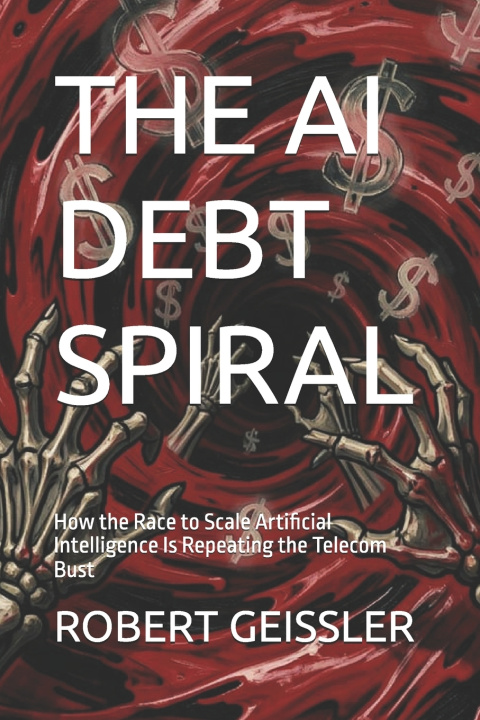
Every generation convinces itself that its infrastructure boom is different - until the bill comes due.
In the late 1990s, Global Crossing spent billions laying fiber-optic cable under the belief that internet bandwidth demand was infinite. The company was right. It was also bankrupt within four years, one of the largest corporate collapses in American history - while a different set of buyers picked up its network for pennies on the dollar and made fortunes on it.
Today, the same pattern is unfolding in artificial intelligence. Hyperscalers and AI labs are pouring hundreds of billions of dollars into chips, data centers, and power infrastructure - spending that has decoupled from any near-term measure of return. The competitive logic is simple: no company can afford to be the one that blinks first. The financial logic is far less forgiving.
In THE AI DEBT SPIRAL, economist and publisher Robert F. Geissler applies the lessons of the telecom bust - and the deeper tradition of Austrian economics - to the AI capital race now underway. Drawing a direct line from Global Crossing and WorldCom to today's circular chip financing and off-balance-sheet data center debt, Geissler makes a case that is optimistic about AI and unsentimental about the balance sheets financing it.
This is not a book about whether artificial intelligence will change the world. It already is. It is a book about who will still be standing to profit from it - and who will be left holding the debt.