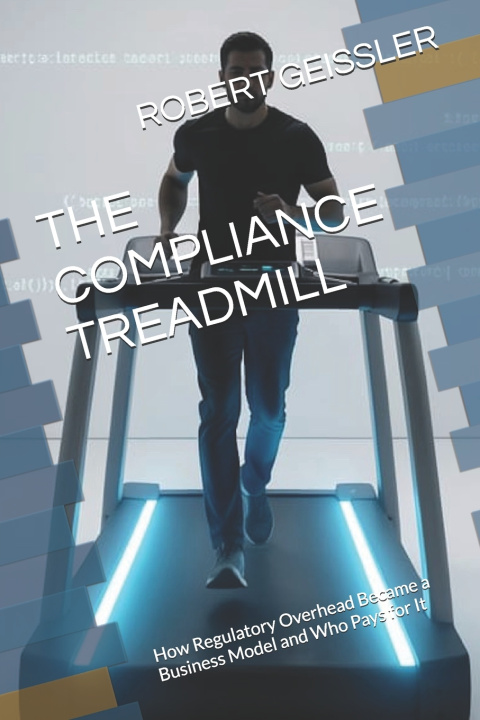
The rules were supposed to protect you. So why do you feel like you're running on a treadmill?
Every year, American businesses spend hundreds of billions of dollars on regulatory compliance - hiring specialists, buying software, producing documentation, satisfying auditors. Every year, the treadmill runs faster. And yet financial crises still happen. Healthcare still fails patients. Fraud still occurs. The most regulated industries in the country produce some of its most spectacular failures.
In The Compliance Treadmill, Robert F. Geissler dismantles the myth that documented process equals ethical conduct. Drawing on the economics of regulation, sector studies in financial services, healthcare, technology, and small business, and a practitioner's understanding of how institutions actually behave, Geissler traces how compliance became a $270 billion industry - and why that industry has a structural interest in keeping the rules complex, the burden growing, and accountability perpetually deferred to the next audit.
This is a book about regulatory capture and the revolving door. About complexity as competitive moat - and how large incumbents use compliance requirements to crush smaller competitors. About the chief compliance officer who bears responsibility without authority, the physician buried in prior authorization paperwork, and the small business owner who gave up before the first customer walked in the door.
But it is also a book about what better looks like: lean, risk-based compliance programs that serve genuine protective purposes; organizational cultures that behave ethically because they choose to, not because they're surveilled into it; and a regulatory framework honest enough to measure outcomes instead of documentation.