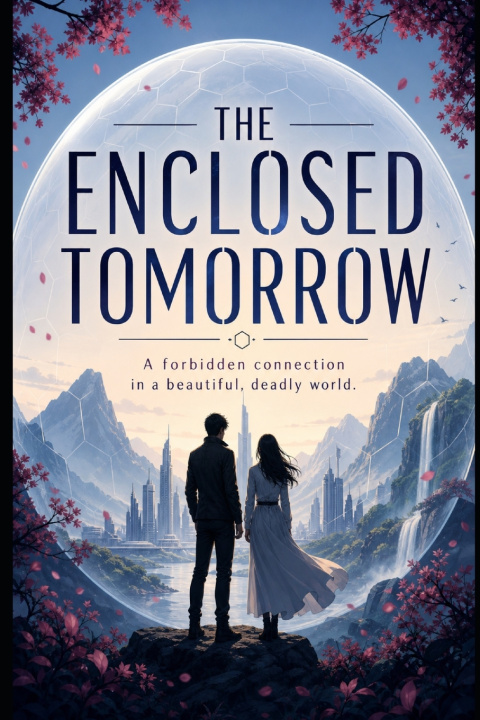
The first time Nichole hears the building breathe, she thinks it's just the vents - old ducts and newer lies, the kind a place learns to wear like perfume. But the air in the Enclosure carries too much intention, too many rehearsed silences, and in the bright hours before the festival the walls already know what she's going to do.
When the government's "courtesy" scripts begin to slip, and Sergey's presence turns from coincidence into threat, Nichole realizes she isn't being watched for her safety - she's being watched for her compliance. What happens when love becomes a break in the system, and truth is the only currency the Enclosure refuses to recognize? The Enclosed Tomorrow asks that question with every step that leaves a footprint behind glass.
By the time the corridor finally admits what it is, the romance has already done its quiet work: it taught Nichole that survival can be chosen, not only endured. Sergey's stubbornness, Nichole's careful risk, and the violence of every "helpful" protocol all braid into one lesson - freedom is never granted, it's taken while the world insists you can't.
Even when the doors open, the outside doesn't stop listening; it only changes what it calls permission. Somewhere beyond the last light, a loop continues to search for its next confession, and Nichole's answer lingers like ozone on the tongue - sharp, unwilling, real. The Enclosed Tomorrow ends on that note: the future can be enclosed, but it can't be owned.