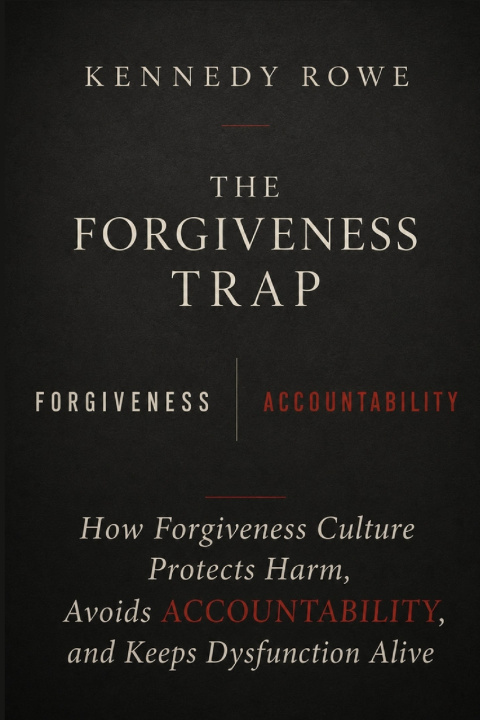
For generations, we have been told that forgiveness is the path to healing. We are encouraged to let go, move on, be the bigger person, and make peace. But what happens when the person who caused the harm has never taken responsibility? What happens when forgiveness is expected while accountability is ignored?
In The Forgiveness Trap, Kennedy Rowe examines the cultural, social, and family pressures that surround forgiveness and explores how those pressures often place the burden of healing on the person who was hurt rather than on the person who caused the harm. Drawing on psychology, trauma research, family systems theory, and real-world examples, this book challenges the belief that forgiveness is always necessary, always healthy, or always deserved.
Through thoughtful discussion and practical insight, readers will explore the difference between forgiveness, trust, reconciliation, acceptance, and access. They will gain a deeper understanding of how families, communities, workplaces, and social groups sometimes prioritize comfort over truth, why accountability is frequently avoided, and how guilt, obligation, and social pressure can keep people trapped in harmful dynamics long after the original injury occurred.
Rather than encouraging readers to remain angry or stuck in the past, The Forgiveness Trap offers a compassionate framework for healing that does not depend on apologies, acknowledgment, reconciliation, or change from the person who caused the harm. It explores how people can rebuild trust in themselves, establish healthy boundaries, grieve what was lost, and move forward with honesty and self-respect.
Whether you are recovering from family dysfunction, betrayal, emotional abuse, addiction in the family, toxic relationships, or other painful experiences, this book offers validation, clarity, and practical guidance for navigating the complicated realities of forgiveness and healing. At its heart, The Forgiveness Trap is a book about reclaiming your voice, trusting your experience, and recognizing that your worth is not measured by how quickly you forgive, but by how honestly you honor your own healing.