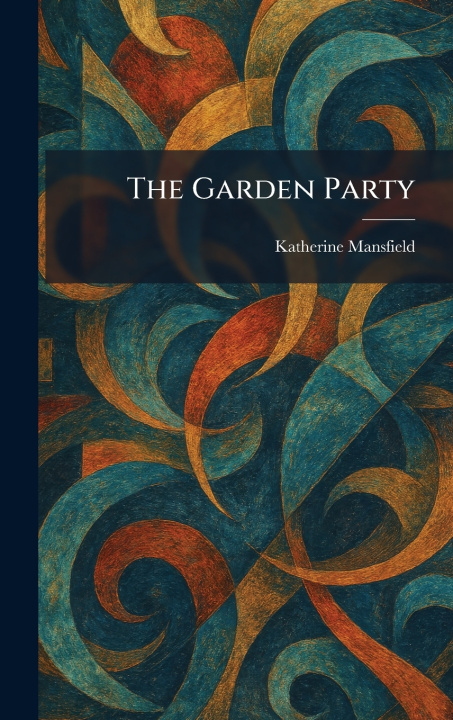
"The Garden Party" is a celebrated collection of short stories by Katherine Mansfield, a foundational figure in modernist literature. Through her evocative prose and keen psychological insight, Mansfield captures the complexities of the human experience, focusing on the subtle emotional shifts and social hierarchies of the early 20th century.
The titular story, "The Garden Party," follows young Laura Sheridan as she prepares for an elegant social gathering, only to be confronted by the sudden reality of death and the stark divide between classes. This narrative serves as a poignant exploration of the loss of innocence and the discovery of empathy. Other stories in the collection continue to delve into themes of domestic life, isolation, and the fleeting nature of happiness, all rendered with Mansfield's signature precision and sensitivity.
Renowned for her ability to transform the mundane into the profound, Mansfield's work in this volume emphasizes the internal lives of her characters over traditional plot structures. "The Garden Party" remains a masterclass in the short story form, offering readers a timeless reflection on life, death, and the intricate web of social relations that define our world.
This work has been selected by scholars as being culturally important, and is part of the knowledge base of civilization as we know it. This work was reproduced from the original artifact, and remains as true to the original work as possible. Therefore, you may see the original copyright references, library stamps (as most of these works have been housed in our most important libraries around the world), and other notations in the work.
This work is in the public domain in the United States of America, and possibly other nations. Within the United States, you may freely copy and distribute this work, as no entity (individual or corporate) has a copyright on the body of the work.
As a reproduction of a historical artifact, this work may contain missing or blurred pages, poor pictures, errant marks, etc. Scholars believe, and we concur, that this work is important enough to be preserved, reproduced, and made generally available to the public. We appreciate your support of the preservation process, and thank you for being an important part of keeping this knowledge alive and relevant.