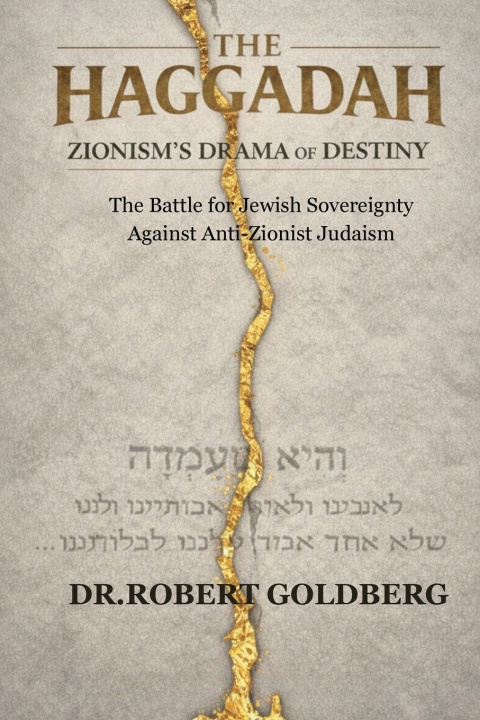
The Haggadah: Zionism's Drama of Destiny argues that the Haggadah was created not just as a memory ritual, but as a declaration that Jewish history could not end in exile and must instead lead to sovereignty. The rabbis who assembled it did not respond to anti-Judaism with arguments alone. They addressed the ideology underlying it by articulating a political theology of return.
In this reading, the Haggadah is not nostalgia. It is a drama of national rebirth. It restores the Jewish story as a struggle to establish and sustain a Jewish state. Most strikingly, I argue that the Haggadah identifies Amalek not simply as an external enemy, but as the recurring archetype of the anti-Zionist Jew-materializing at the table as the Wicked Son, the internal voice that weakens Jewish resolve, severs identity from peoplehood and land, and recasts sovereignty as a moral failure.
That dynamic is not theoretical. It is one of the defining features of our moment.
Modern anti-Zionist figures and movements increasingly translate ancient hostility into the language of justice, making attacks on Jewish sovereignty sound like moral seriousness. The book argues that the Haggadah anticipated this problem and answered it: not with passivity, but with a formation ritual designed to move Jews from slavery to sovereignty, from a covenant of fate to a covenant of destiny.