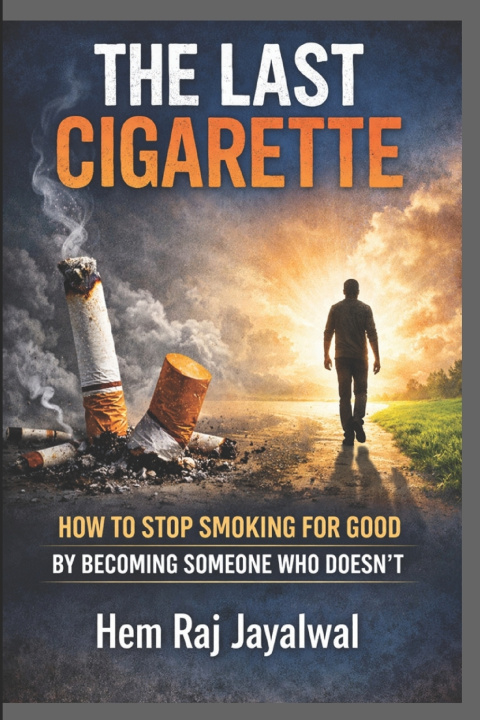
THE LAST CIGARETTE
HOW TO STOP SMOKING FOR GOOD BY BECOMING SOMEONE WHO DOESN'T
The Last Cigarette is a comprehensive, evidence-based guide designed to help smokers permanently overcome nicotine addiction and build a healthier, smoke-free life. Written with empathy, scientific accuracy, and practical wisdom, the book addresses not only the physical dependence on nicotine but also the psychological, emotional, and behavioural factors that keep people trapped in the cycle of smoking.
The book begins by challenging one of the most common misconceptions about smoking cessation: that quitting is simply a matter of willpower. Through accessible explanations of neuroscience and addiction psychology, readers learn how nicotine alters the brain's reward system, creates physical dependence, and establishes powerful habit loops that make smoking difficult to quit. Understanding these mechanisms removes shame and self-blame while providing a foundation for successful change.
Part I explores the nature of nicotine addiction in depth. Readers discover how cigarettes manipulate dopamine pathways, reinforce behavioral patterns, and create conditioned associations with everyday activities such as drinking coffee, socializing, dealing with stress, or taking breaks. The book also examines the true cost of smoking, including health consequences, financial burdens, social impacts, and emotional tolls. It encourages readers to examine previous quit attempts not as failures but as valuable learning experiences that provide critical information for future success.
Part II focuses on preparation and planning. Recognizing that motivation is a key driver of lasting change, the book guides readers through exercises designed to uncover their deepest reasons for quitting. It helps them identify personal values, create motivational anchors, and establish meaningful goals. Readers then learn how to select the most appropriate quitting method, whether that involves nicotine replacement therapy, medication, behavioral strategies, professional support, or a combination of approaches. The section concludes with practical guidance for choosing an effective quit date and preparing for the challenges ahead.
Part III addresses the critical first thirty days after quitting. This period is often the most difficult because of withdrawal symptoms and intense cravings. The book provides detailed strategies for understanding and surviving nicotine withdrawal, managing physical and emotional discomfort, and responding effectively to cravings when they occur. Readers learn how to recognize triggers, interrupt automatic smoking behaviors, and replace them with healthier coping mechanisms. Practical exercises, worksheets, and real-world techniques help build confidence during the most vulnerable stage of recovery.
Part IV examines the long-term psychological aspects of remaining smoke-free. The book emphasizes that successful quitting is not merely a behavioral achievement but an identity transformation. Readers are guided through the process of adopting a non-smoker identity and developing habits that support lasting change. The section also addresses nutrition, exercise, sleep, stress management, and social situations that can either support or undermine recovery. Special attention is given to handling parties, workplace environments, relationships, and other circumstances where smoking cues may remain strong.
Part V focuses on resilience and relapse prevention. The author acknowledges that setbacks can occur and provides a clear framework for distinguishing between a temporary slip and a full relapse. Readers learn how to recover quickly from mistakes, strengthen their commitment, and continue progressing toward long-term success. The book also introduces effective stress-management techniques that do not rely on nicotine, helping readers build healthier emotional coping skills.
<...