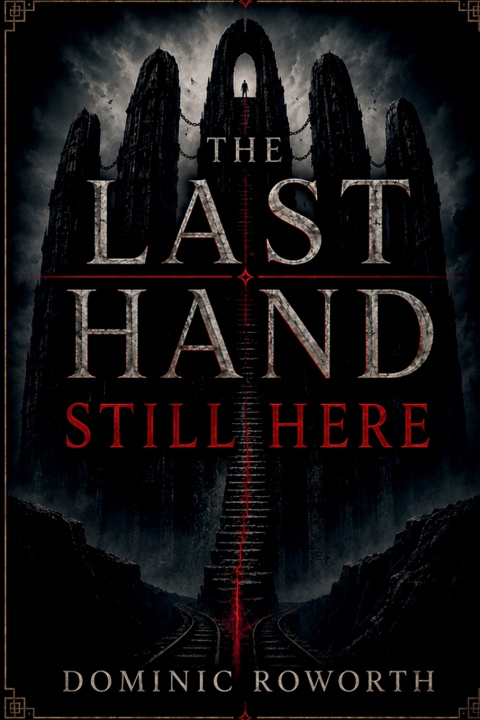
Two hundred years after a collapse that wasn't an accident, the world is ruled by the Last Hand - a quiet cabal of administrators who engineered the end of the old world to build a new one in their own image. They are still alive. They are still in charge.
And every year they harvest the male children of the wild - boys of fourteen - and march them through a system designed to break the ones who can't be used.
Elias Vance is fourteen the morning the grey-ones come to his village. He has a younger brother, Cassian. They are taken on the same train.
At a junction halfway to the camps, on the order of a man whose name nobody outside the inner circle knows, the brothers are separated. The younger is sent to the leader's house. The older is sent to the Pit.
Elias does not see Cassian again for four years.
What he becomes in those four years - what he survives, what he loses, what he is willing to do to climb back toward the only person in the world he still has - is the story of Still Here.
This is a debut adult dystopian thriller. First person. Brutal but hopeful. Literary but propulsive.
The Hand is not a tyranny of jackboots and parades. It is administrative. It is patient. It runs spreadsheets. It has been running them for two hundred years.
The resistance is not a guerrilla army. It is a city of nine thousand under the ground, mostly women, with one knife and the patience of a generation.
The protagonist is not a chosen one. He is the older brother of the chosen one. And his climb to the top of a year-long competition called the Trials is not, in the end, a climb toward power. It is a climb toward a door he has been told will, if he survives it, open onto a room with his brother in it.
There is a recurring two-word prayer in this book: Still here. Still here.
It is the title.
It is also the only thing the protagonist has, by the end, that the Hand has not been able to take from him.
The Last Hand: Still Here is Book One of a planned trilogy. The second and third books are coming.