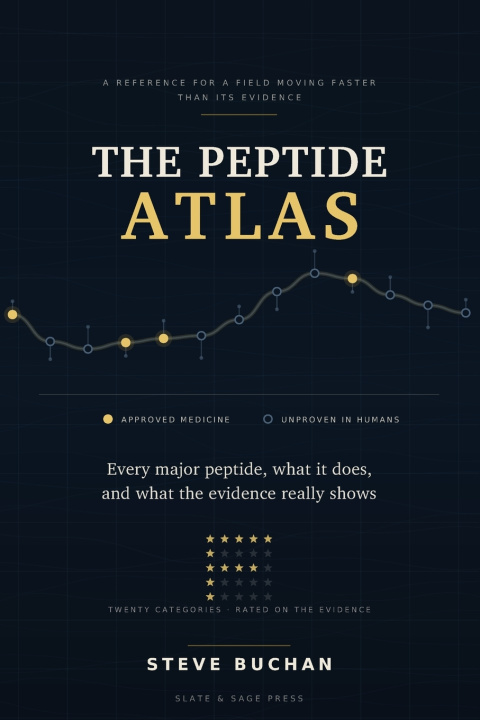
A field is moving faster than its own evidence.
In a few short years, one class of peptides has reshaped how the world treats obesity and metabolic disease. Behind those approved medicines sits a vast, largely unregulated market selling compounds that have never been tested in a human being. Most writing about peptides sells you something. This book maps the territory instead.
The Peptide Atlas is a complete, plain-English reference to the peptide landscape, written for anyone who wants to understand it properly: patients working with a clinician, students, writers, and the simply curious. It assumes no science and starts from the beginning.
Across twenty categories, it covers every major peptide, from the GLP-1 medicines in millions of people to the grey-market compounds sold on animal data and hope. For each one it sets out what it is, how it works, what it is used or studied for, what benefits are claimed, and what the evidence actually shows.
Every category opens with a scorecard rating the strength of the human evidence, the quality of the safety data, the regulatory status in the UK and US, and whether a real approved product exists. The difference between the categories is visible at a glance, and it is stark.
Inside:
- What peptides, proteins and amino acids actually are, explained from first principles
- The companies and the pipeline: who is building the next generation, and how fast
- What is approved, where, and for exactly what, with UK and US status side by side
- Twenty categories rated on the evidence, from GLP-1s to senolytics to skincare
- Sourcing, counterfeits, certificates of analysis, and why "research use only" is not a permission slip
- Adverse effects, interactions, and why combining compounds multiplies risk rather than adding it
- Protein, resistance training and monitoring: the things that determine more of the outcome than any compound
- How to read a clinical study for yourself, so you never have to take anyone's word for it
What this book is not: it contains no dosing, no titration schedules, no protocols, and no stacks. It is not a manual for using anything. It is a reference for understanding a field, and it is written to make you harder to mislead.
Regulatory and clinical status current as of July 2026. This book is educational and is not medical advice.