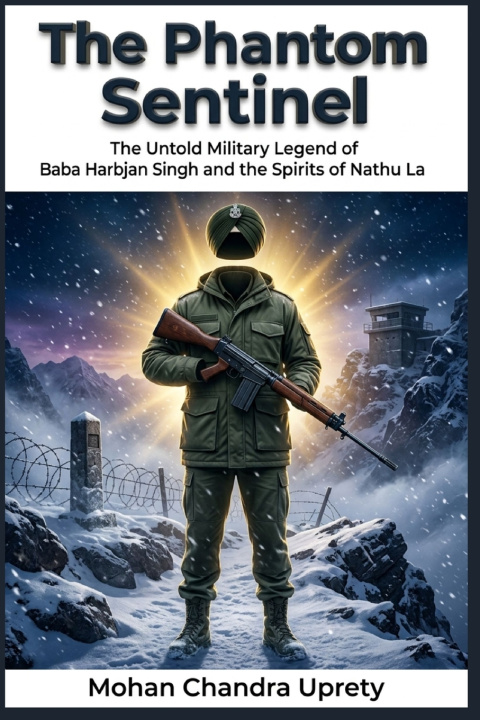
How does a modern, mechanized army rationalize a ghost on its active payroll? For scholars of defense studies, sociologists, and historians of the Indian subcontinent, the integration of a deceased sepoy into formal operational protocols challenges everything we understand about warfare, bureaucracy, and human endurance.
At elevations exceeding 14,000 feet, the Sino-Indian border represents an incredibly hostile tactical environment. The extreme cold, relentless hypoxia, and psychological isolation routinely break down standard operational cohesion. Following a fatal supply run in October 1968, the ranks of the Punjab Regiment began reporting sightings of a fallen comrade patrolling the icy ridges. Rather than suppress these accounts, the high command quietly absorbed them into their official command structure, creating a formalized coping mechanism for troops stationed at the edge of human endurance.
This text explores the precise mechanisms through which localized folklore becomes an institutional reality. Through a careful review of administrative logistics, bilateral troop interactions, and geopolitical theory, it documents the decades-long career of an ethereal guardian. It investigates how opposing Chinese forces acknowledge this presence during tense diplomatic meetings, revealing a rare, shared psychological buffer in an otherwise zero-sum territorial dispute.
Beyond the mechanics of the frontier, this analysis maps the civilian impact of the phenomenon. As the original tactical bunker expanded into a site of mass national pilgrimage, the localized lore bridged the gap between isolated border guards and the civilian populace, redefining the regional economy of East Sikkim.
Inside This Guide:
Investigate the brutal environmental and physiological realities of high-altitude combat deployments.
Trace the exact administrative procedures used to issue salary and arrange annual leave for a non-physical entity.
Evaluate the role of shared supernatural narratives in de-escalating kinetic tensions between opposing frontline garrisons.
Map the infrastructural evolution from a restricted alpine outpost to a massive civilian shrine complex.
Compare this specific phenomenon with other documented instances of battlefield apparitions across international conflicts.
Clarify complex tactical terminology and regional geographic descriptors for a global readership.
Authored by Mohan Chandra Uprety, this specific edition distinguishes itself through rigorous archival analysis and deep regional contextualization. Drawing upon a specialized background in documenting subcontinental cultural history, the text systematically separates verifiable government records from evolving oral traditions. It provides an unvarnished, fact-based examination of extreme human resilience, delivering exceptional clarity without relying on sensationalism. The resulting text is a highly organized, professional resource designed for researchers, military historians, and those seeking a precise understanding of Himalayan geopolitics.