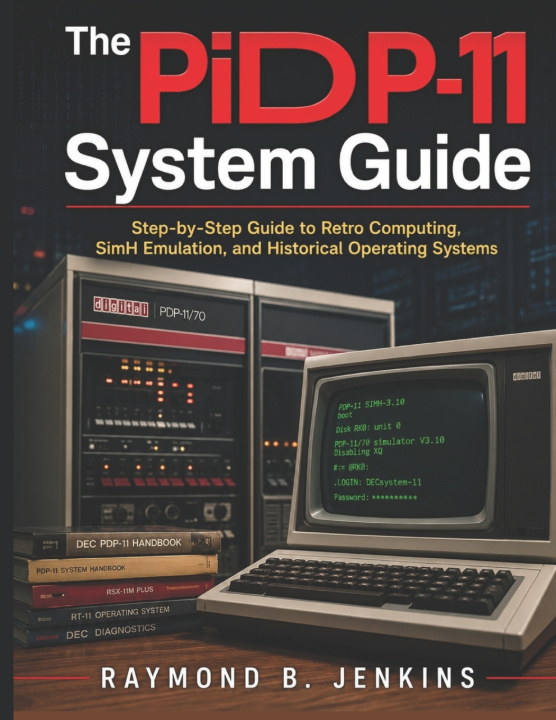
Have you ever assembled a PiDP-11, powered it on, and wondered, What do I do next? Have you found yourself searching through manuals, websites, forums, and videos, only to feel overwhelmed by the sheer amount of information available?
The PiDP-11 System Guide is designed to answer those questions.
Whether you're completely new to retro computing or looking for a structured way to explore the PDP-11 world, this book provides a clear, practical, and beginner-friendly path. From assembling and configuring your PiDP-11 to running classic operating systems and exploring historical software, you'll learn everything you need to start using your system with confidence.
What made the PDP-11 one of the most influential computers ever created? Why did it play such a significant role in the development of modern operating systems and programming languages? And what can it still teach us today?
Inside, you'll discover how to set up and operate your PiDP-11, use SimH, navigate operating systems such as RT-11, RSTS/E, RSX-11, and UNIX, manage disk images, transfer files, run classic software, and explore programming with BASIC, FORTRAN, Pascal, C, and Assembly language.
But this book is more than a technical guide.
It's an opportunity to experience computing history firsthand. Instead of simply reading about vintage systems, you'll interact with them, experiment with them, and gain a deeper understanding of how computers worked long before modern graphical interfaces existed.
Worried that retro computing might be too complicated?
You don't need to be an engineer, programmer, or historian. You only need curiosity and a willingness to learn.
With step-by-step explanations, practical examples, troubleshooting guidance, projects, FAQs, and a comprehensive glossary, this book helps you build confidence while exploring one of the most important computer systems ever created.
Are you ready to flip the switches, boot legendary operating systems, and discover the foundations of modern computing?
Get your copy today and begin your journey into the fascinating world of the PiDP-11.