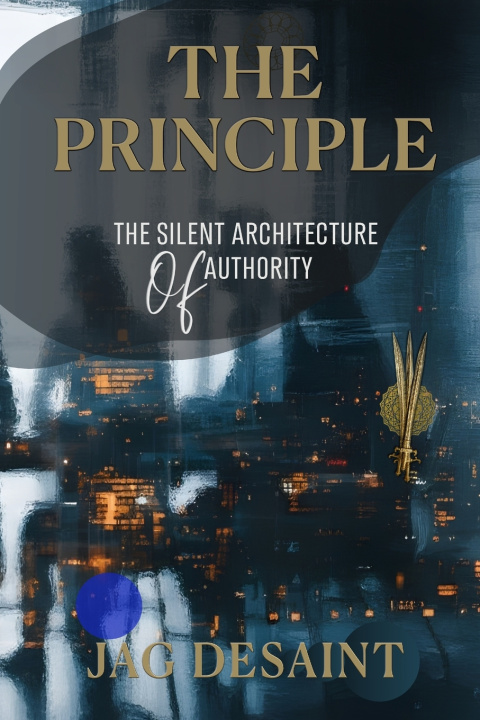
The Principle: The Silent Architecture of Authority is a ruthless examination of how power operates beneath the visible language of politics, institutions, loyalty, fear, legitimacy, succession, and control.
This is not power as advertised. This is power as practiced.
"Every institution tells one story about how it works. Power begins in the space between that story and the operation beneath it."
Across history, authority has rarely belonged to the loudest figure, the most virtuous figure, or even the figure whose title appears most prominently on the door. It has belonged to the operator who understood the room before entering it - the one who recognized the procedure behind the ceremony, the arrangement beneath the institution, and the decision before it was announced.
The Principle descends beneath the official story of power to expose the machinery that governs from below the surface. It examines how authority is built before it is named, how legitimacy is manufactured before it is believed, how loyalty is constructed before it is tested, how enemies are positioned before they are defeated, how succession is arranged before the throne appears vacant, and how institutions are shaped by those who understand the difference between what is visible and what is operative.
Through emperors, generals, ministers, financiers, courtiers, founders, revolutionaries, strategists, and the hidden operators behind them, the book reveals the mechanisms by which power is occupied, preserved, inherited, weaponized, and lost. From ancient courts to modern institutions, from military campaigns to financial systems, from imperial succession to bureaucratic control, the same patterns recur with brutal consistency. The language changes. The costumes change. The rooms change. The operation remains.
This is not a moral defense of domination, cruelty, manipulation, or ambition. It is a cold study of how authority moves through history once stripped of its official explanations. It asks what institutions conceal, what leaders misunderstand, what followers mistake for order, and what operators recognize long before anyone else knows a decision has already been made.
At its center is a simple and dangerous recognition: power is never merely given. Titles may be granted. Offices may be assigned. Crowns may be inherited. Promotions may be announced. But the deeper substance of power is occupied by those willing to see what others were trained not to see.
The reader is taken through the silent architecture beneath authority: strategic patience, unexpected entrances, manufactured inevitability, intelligence networks, court management, useful enemies, personal loyalty, legitimate force, inheritance, decline, succession, fortune, and the vocabulary through which power becomes visible to those capable of registering it.
What emerges is a disturbing map of human institutions. The people inside them often believe they are advancing through merit, procedure, law, tradition, or choice. Sometimes they are. But beneath those explanations sits another layer: the operational layer, where positions are prepared, candidates are observed, rivals are weakened, allies are bound, threats are framed, and futures are arranged before they appear to happen naturally.
The Principle is written for readers who want more than slogans about leadership, decorative history, or comforting theories about how institutions are supposed to work. It is for readers willing to confront the darker precision of authority: how it is constructed, why it endures, why it collapses, and why most people recognize its mechanisms only after those mechanisms have already operated on them.
Power is never given. It waits beneath every institution, empire, throne, boardroom, ministry, court, closed door, and polished table for the one willing to see what others were taught to leave unseen.