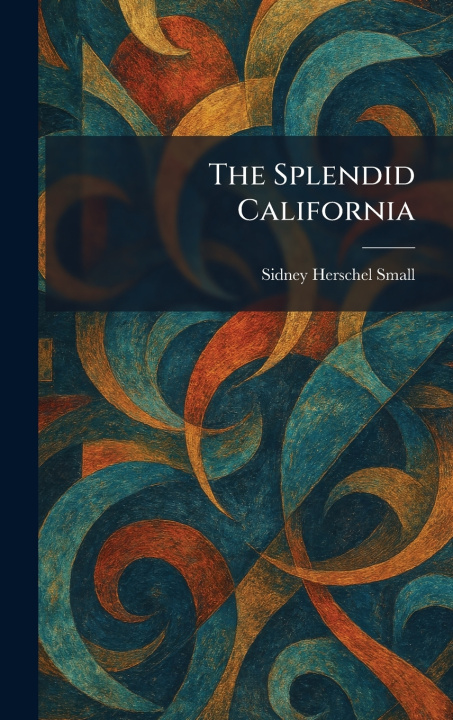
"The Splendid California" is a vibrant historical novel that transports readers back to the romantic and turbulent era of early California. Set against the backdrop of sprawling Spanish ranchos and the fading influence of the missions, the story captures a pivotal moment in the history of the American West. Through a narrative rich in atmosphere and period detail, Sidney Herschel Small weaves a tale of passion, honor, and the struggle for land and legacy in a territory on the cusp of profound change.
The work follows the lives of characters caught between the old traditions of the Spanish dons and the encroaching pressures of a new world. With its focus on the social hierarchy, the rugged beauty of the landscape, and the spirit of adventure that defined the frontier, "The Splendid California" serves as both an engaging drama and a vivid reconstruction of a bygone way of life. It stands as a notable example of early 20th-century historical fiction that celebrates the multicultural heritage and the dramatic transformation of the Golden State.
This work has been selected by scholars as being culturally important, and is part of the knowledge base of civilization as we know it. This work was reproduced from the original artifact, and remains as true to the original work as possible. Therefore, you may see the original copyright references, library stamps (as most of these works have been housed in our most important libraries around the world), and other notations in the work.
This work is in the public domain in the United States of America, and possibly other nations. Within the United States, you may freely copy and distribute this work, as no entity (individual or corporate) has a copyright on the body of the work.
As a reproduction of a historical artifact, this work may contain missing or blurred pages, poor pictures, errant marks, etc. Scholars believe, and we concur, that this work is important enough to be preserved, reproduced, and made generally available to the public. We appreciate your support of the preservation process, and thank you for being an important part of keeping this knowledge alive and relevant.