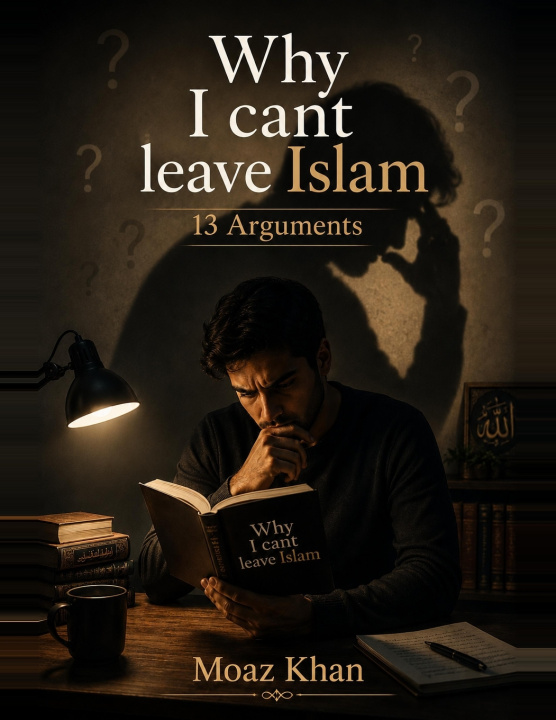
A direct case for staying, written for the people most likely to leave - Muslims in quiet doubt, ex-Muslims, and atheists or agnostics who've actually studied Islam.
This isn't recycled apologetics. Why I Can't Leave Islam is a 13-chapter case built from logic, history, ethics, and real stories from the Quran and the Prophet's life - paired honestly with the strongest objections to each one, not a defensive version that hides its weak points.
It opens with the idea that belief in God may be built into human nature itself, illustrated by Salman al-Farisi's decades-long search across religions before he found what he was looking for. From there it moves into philosophy: the cosmological argument for God's existence, traced back to Ibrahim reasoning his way past the stars, the moon, and the sun centuries before anyone called it formal logic.
The middle chapters take on Islam's social, ethical, and financial claims - honesty in trade, debt and mercy, equality across race and gender - without softening the genuinely contested parts. A full chapter examines the character of the Prophet Muhammad through specific, checkable claims: his illiteracy, the trust Mecca placed in him before he ever preached, his mercy at the conquest of Mecca, and the conversion of Umar ibn al-Khattab, a man who set out to kill him and became one of his most devoted followers instead.
Later chapters cover the five daily prayers and their origin story, the question of life's purpose, and a hard distinction between judging Islam by its texts versus judging it by the failures of some who claim it. Suffering gets a full, honest chapter too - built around the Prophet's own visible grief, refusing to pretend faith requires emotional suppression. Common misconceptions, including the so-called sword verse and apostasy law, are addressed directly, with real historical context rather than a single tidy answer.
Before the conclusion sits the chapter that matters most: written for readers whose distance from Islam isn't about arguments at all - people who feel they don't fit, people converted under pressure, people never properly taught, people hurt by other Muslims. It centers on the story of a man who killed a hundred people and still found mercy waiting for him at the end, with one clear boundary: mercy never excuses violating someone else's rights.
The conclusion doesn't let anyone off easy, including itself. If you sit with the real arguments and still want to leave, the honest move is to build something stronger to replace them - not a vague feeling, but an actual counter-case. But it's equally honest about what that challenge doesn't cover: not everyone's doubt is philosophical, and pain, abuse, or unresolved suffering don't need a philosophy degree to count as real reasons.
Every chapter trusts you to weigh both sides yourself. No caricatures, no guilt-tripping - just the strongest version of the case, so that whatever you decide, you decide with your eyes open.