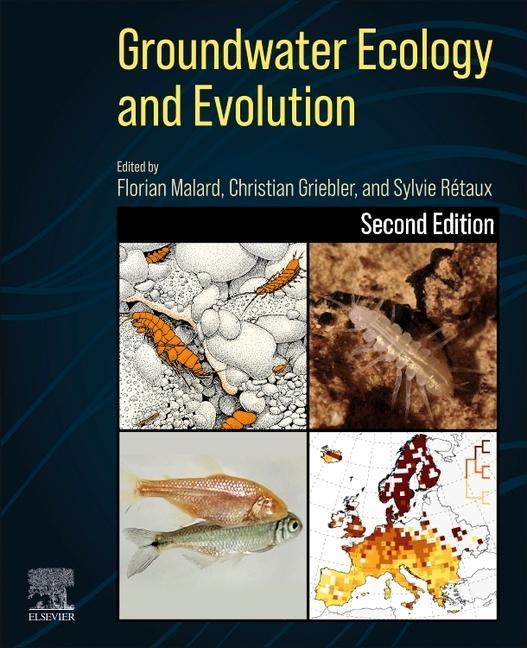
Groundwater Ecology and Evolution, Second Edition is designed to meet a multitude of audience needs. The state-of-the-art in the discipline is provided by the articulation of 6 sections which successively carry the reader into the basic attributes of groundwater ecosystems (section 1), the processes shaping patterns of species diversity (i.e. diversification and dispersal in section 2), the evolutionary forces driving the acquisition of subterranean biological traits (section 3), the way these traits are differently expressed among groundwater organisms (section 4), and the role of organisms in maintaining biogeochemical processes (section 5). Finally, section 6 shows how knowledge acquired among multiple research fields (sections 1 to 5) is used to manage groundwater biodiversity and ecosystem services in the face of future groundwater resource use scenarios (section 6). Section 6 is an applied outreach from basic knowledge gained through the book; yet, many of the applications covered in this section are briefly introduced in sections 2 to 5 with reference to section 6. Emphasis on the coherence and prospects of the whole discipline is made in introduction and conclusions of the book. Groundwater Ecology and Evolution, Second Edition is primarily intended for an audience of graduate students, post-graduate students and academic researchers involved in the study of groundwater ecosystems. Provides a modern synthesis of research dedicated to the study of groundwater ecosystems Bridges the gap between community ecology, evolution and functional ecology, three research fields that have long been presented in isolation Explains how this trans-disciplinarily integration of research contributes to understanding and managing groundwater ecosystem function Reveals the contribution of groundwater ecology and evolution in solving scientific questions well beyond the frontiers of groundwater systems